


1 Moody Sailing Yacht for Sale
Browse our 1 Moody sailing yacht listing and learn more about Moody, the company that built them
Show 4 specialties
Moody Buyer's Guides
(1 guide)Updated 1 January 2025 · By Hulls.io Editorial
About Moody
Moody is one of the most historically significant names in British yachting, with a lineage that stretches back to 1827 — predating the founding of the Royal Yacht Squadron's first America's Cup challenge by over two decades. The company was established by John Moody in Swanwick, Hampshire, on the western bank of the River Hamble, one of the most storied sailing rivers in England. For nearly 150 years, the Moody yard built, maintained, and refitted wooden yachts for generations of British sailors, establishing a reputation for solid craftsmanship and deep maritime knowledge that would carry the brand through the twentieth century and into the twenty-first.
The modern Moody sailboat range emerged in the 1970s when the company transitioned from wooden boatbuilding to fibreglass production, a shift that transformed the entire British marine industry. The early fibreglass Moodys were designed by Angus Primrose, a talented naval architect who drew a series of practical, seaworthy cruising yachts that found a loyal following among British coastal and offshore sailors. Models such as the Moody 33, Moody 34, Moody 36, and Moody 38 became staples of the UK cruising fleet during the 1970s and 1980s, valued for their solid construction, sensible layouts, and honest sailing characteristics. Later models including the Moody 376, Moody 422, Moody 44, and Moody 47, designed by Bill Dixon and Erwin Leievre, continued to evolve the range with more refined hull forms and increasingly comfortable interiors. Many of these Hampshire-era Moodys remain in active commission today, a testament to their build quality.
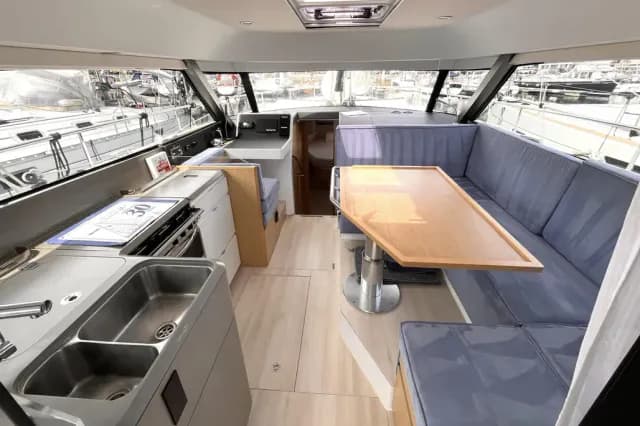
The defining chapter in Moody's modern history began in the early 2000s when the brand embraced the deck saloon concept and made it the centrepiece of its identity. Working with naval architect Bill Dixon — one of the most respected designers in the cruising yacht world — Moody developed a range of deck saloon yachts that fundamentally rethought the relationship between the cockpit, the saloon, and the sea. In a conventional sailing yacht, the main saloon is below deck level, separated from the outside world by a companionway and offering limited natural light through small portlights. The Moody deck saloon raises the entire living space to deck level, providing panoramic 360-degree views through large windows while maintaining full standing headroom in the accommodation below. The result is a yacht that feels more like a floating apartment than a traditional sailboat — flooded with natural light, visually connected to the sea, and offering a level of interior spaciousness that belies the hull length.
In 2007, Moody was acquired by Hanse Group AG, the German sailing yacht conglomerate listed on the Frankfurt Stock Exchange under the ticker H9Y. Hanse relocated Moody production from the historic Swanwick yard to its modern facility in Greifswald, on the Baltic coast of northeastern Germany. The move was a significant moment for the brand — the departure from Hampshire ended nearly 180 years of boatbuilding on the Hamble — but it brought Moody into one of Europe's most advanced yacht production facilities, with access to Hanse's engineering resources, composite technology, and global dealer network. The Hanse Group's stated strategy has been to position Moody as the premium deck saloon brand within its portfolio, distinct from the performance-oriented Hanse line and the entry-level Dehler range.
The current Moody range comprises three models: the Moody 41 DS, Moody 45 DS, and Moody 54 DS, all designed by Bill Dixon and all built around the signature deck saloon configuration. The Moody 54 DS, the flagship, won European Yacht of the Year 2012 in the luxury cruiser category — a recognition that validated the deck saloon concept at the highest level of the industry. These yachts are characterised by their raised coach roofs with wraparound glazing, twin-helm steering positions with excellent visibility, and interiors that prioritise living comfort over spartan offshore minimalism. Below the deck saloon level, the accommodation includes owner's cabins, guest cabins, and heads compartments with headroom and space that would be exceptional on a yacht ten feet longer with a conventional layout.
The typical Moody buyer is an experienced cruising sailor — often a couple in their fifties or sixties — who has graduated from smaller cruisers and is looking for a yacht that combines genuine offshore capability with exceptional liveaboard comfort. These are sailors who prioritise interior light, panoramic views, and quality of life aboard over outright sailing performance or racing credentials. Many Moody owners undertake extended cruising voyages — Mediterranean circuits, Atlantic crossings, or multi-year liveaboard programmes — and the deck saloon configuration is ideally suited to this lifestyle, providing a bright, spacious living environment that makes spending weeks or months aboard not just tolerable but genuinely pleasurable. In the broader market, Moody competes with Hallberg-Rassy (the Swedish benchmark for bluewater cruising quality), Discovery Yachts (another British deck saloon builder), Southerly (known for swing-keel cruisers), and, to some extent, its Hanse stablemates. But in the specific niche of the purpose-built deck saloon sailing yacht, Moody remains the definitive name — a brand whose identity is inseparable from the concept it pioneered.
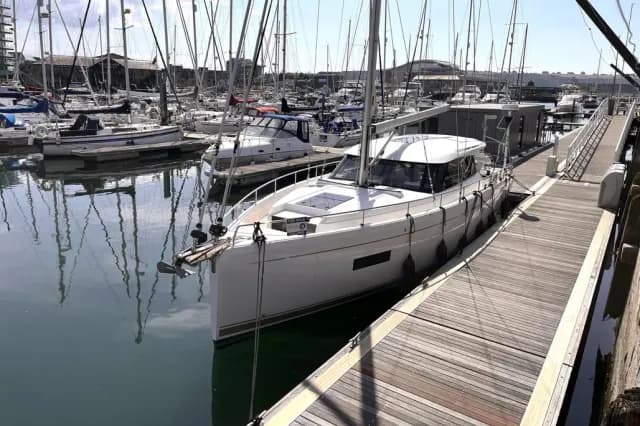
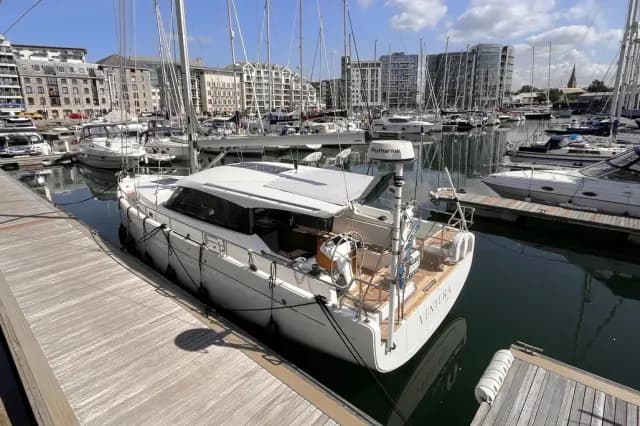
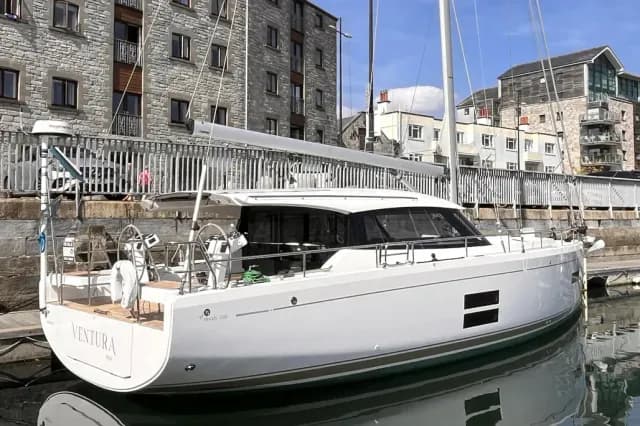
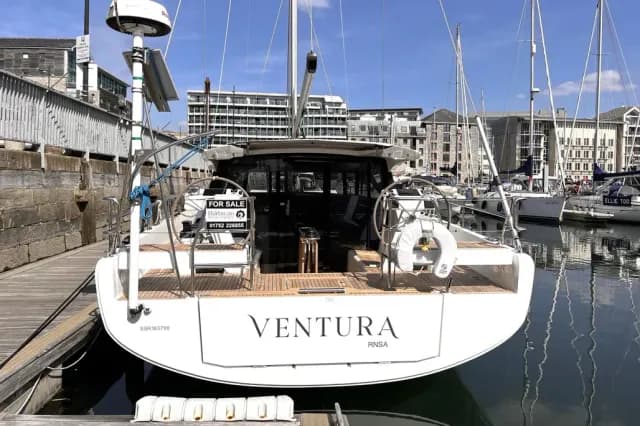
1 Moody Sailing Yacht For Sale
Moody Listings
Frequently Asked Questions About Moody
Where are Moody yachts built today?
Moody yachts are now built at the Hanse Group AG production facility in Greifswald, Germany, on the Baltic coast. The brand was acquired by Hanse in 2007 and production was relocated from the historic A.H. Moody & Son yard in Swanwick, Hampshire, UK, where Moody boats had been built since 1827. The Greifswald facility is one of the most modern yacht production plants in Europe, shared with the Hanse and Dehler brands.
What makes a Moody deck saloon special?
The Moody deck saloon raises the main living area to deck level, providing panoramic 360-degree views through large wraparound windows while maintaining full standing headroom in the cabins below. This creates an interior flooded with natural light that feels dramatically more spacious and connected to the sea than a conventional sailing yacht layout. The design is particularly valued by liveaboard cruisers and long-distance voyagers who spend extended periods aboard and want a bright, comfortable living environment rather than a dark, enclosed cabin.
How does Moody compare to Hallberg-Rassy?
Both are premium European cruising yacht brands, but they occupy different niches. Hallberg-Rassy builds traditional centre-cockpit bluewater cruisers with a focus on seaworthiness, build quality, and Scandinavian craftsmanship — they are the benchmark for offshore passage-making. Moody specialises in deck saloon yachts that prioritise interior light, panoramic views, and liveaboard comfort. Hallberg-Rassy appeals to sailors who want a proven offshore platform; Moody appeals to cruisers who want the most spacious, light-filled interior possible. Both brands command strong resale values and attract experienced, quality-conscious buyers.
What is the most popular Moody model?
Among the current range, the Moody 45 DS is considered the sweet spot — large enough for serious cruising with a genuinely spacious deck saloon, but manageable for a couple to sail. Among heritage models, the Moody 376 and Moody 34 are the most numerous on the used market and remain popular with coastal cruisers in the UK and Europe. The flagship Moody 54 DS, winner of European Yacht of the Year 2012, is the most prestigious model in the range.
Are Moody yachts good for liveaboard use?
Moody yachts are considered among the best liveaboard sailing yachts available. The deck saloon configuration provides an extraordinarily bright and spacious living environment, with panoramic views and natural light that make extended time aboard genuinely comfortable rather than merely tolerable. The raised saloon also creates excellent headroom in the accommodation below. Many Moody owners live aboard for months or years at a time, and the brand's design philosophy specifically targets cruising couples who want their yacht to function as a comfortable floating home.