


Formosa 51 Ketch for Sale
Ketch / Bluewater CruiserThe flagship of Taiwan's legendary Formosa range, the 51 Ketch was designed by William Garden and built with 1¼-inch solid fibreglass hulls for serious ocean passage-making. With a full-length keel, heavy displacement, lavish hand-carved teak interiors, and a staysail ketch rig, this is one of the most iconic traditional bluewater cruisers ever produced. Approximately 100-120 hulls were built between 1973 and 1984.
Show 1 award
Show 6 key features
Updated 10 June 2026 · By Hulls.io Editorial
The Formosa 51 Ketch: A Complete Guide
The Formosa 51 Ketch is a heavy-displacement bluewater cruiser designed by the legendary naval architect William Garden and built by the Formosa Boat Building Company in Kaohsiung, Taiwan. With her clipper bow, full keel, hand-crafted teak interior, and 1¼-inch solid fiberglass hull below the waterline, the Formosa 51 represents the archetype of the 1970s Taiwan-built ocean cruiser — a boat designed not for weekend sailing but for crossing oceans and living aboard indefinitely. Approximately 100 hulls were built between 1972 and 1982, and several have completed circumnavigations.
William Garden (1918–2011) was a Seattle-based yacht designer whose work defined the heavy-displacement cruising aesthetic for a generation. The Formosa 51 was among his most successful production designs: a clipper-bowed, full-keeled ketch that prioritised comfort, load-carrying ability, and seaworthiness above all else. The comfort ratio of 58+ places the Formosa 51 among the most sea-kindly production sailboats ever built — the kind of boat where you can sleep soundly in a mid-ocean gale while lesser boats pound and roll.
The Formosa Boat Building Company was founded in 1969 by Y.C. Yang and at its peak produced over 1,000 vessels annually, primarily for export to the United States. Formosa specialised in fibreglass sailing yachts based on designs by American naval architects including Garden, Doug Peterson, Robert Perry, and Stan Huntingford. Rising Taiwanese labour costs and shifting market preferences toward lighter, faster designs led to the yard’s closure in the mid-1980s. Today, the Formosa 51 is the flagship of the yard’s legacy — a collector’s classic with a devoted owner community.
Hulls.io currently tracks 1 active listing for the Formosa 51 Ketch, drawn from brokerages worldwide.
Showing 1–1 of 1 results
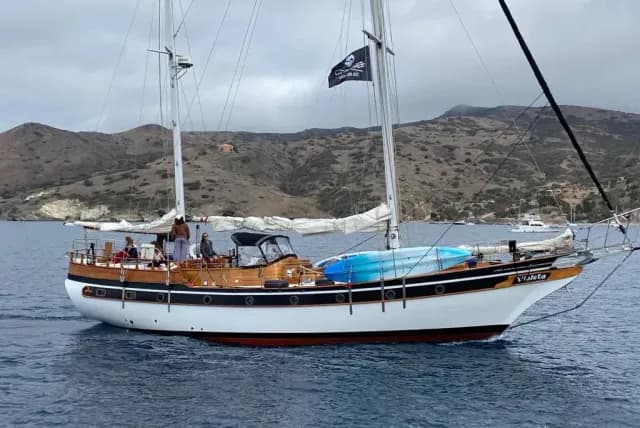
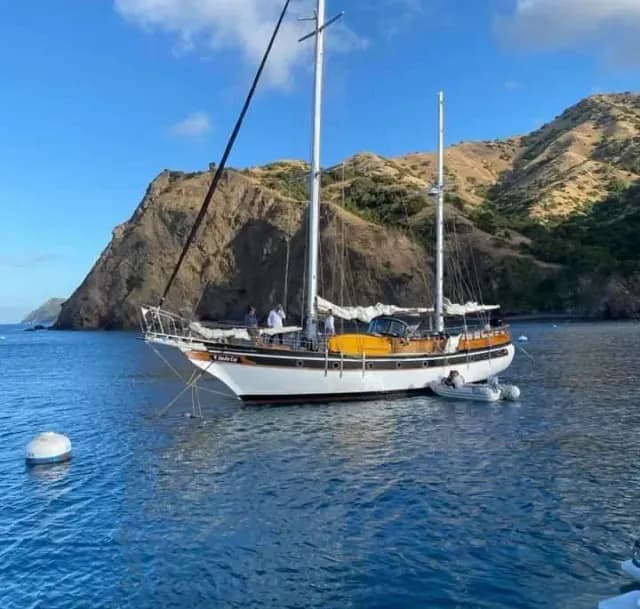
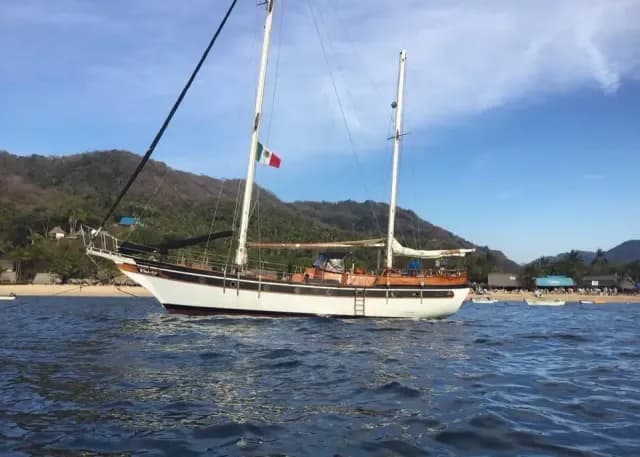
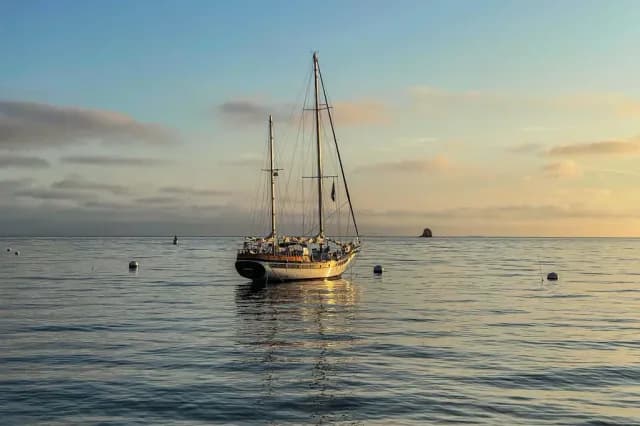
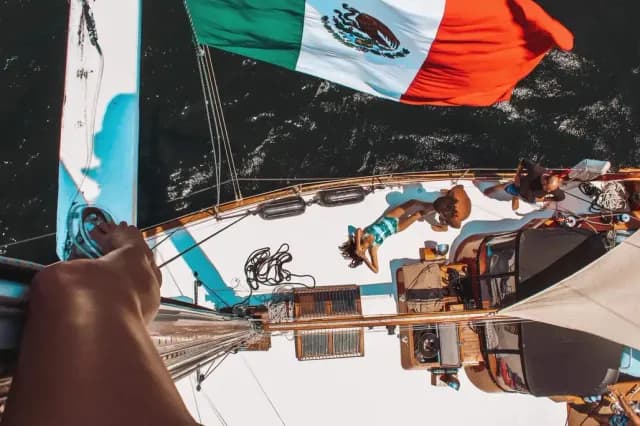
1976 Formosa 51 Ketch
Formosa 51 Ketch Specifications
| Specification | Detail |
|---|---|
| LOA (inc. bowsprit) | 60 ft 0 in (18.29 m) |
| Length on deck | 50 ft 10 in (15.52 m) |
| LWL | 39 ft 0 in (11.89 m) |
| Beam | 14 ft 2 in (4.32 m) |
| Draft | 6 ft 2 in – 6 ft 6 in (1.88–1.98 m) |
| Displacement | 40,000–56,000 lbs (18,144–25,401 kg) |
| Ballast | 12,000–15,000 lbs external lead |
| Hull material | Solid fiberglass, 1¼ in (32 mm) below waterline |
| Keel type | Full keel, encapsulated lead |
| Rig | Ketch (often cutter-ketch), aluminium spars |
| Engine (most common) | Ford Lehman 2715E, 120 hp diesel |
| Fuel capacity | 160 US gal (606 L) standard |
| Water capacity | 150 US gal (568 L) standard |
| Cabins | 3 staterooms |
| Heads | 2 |
| Headroom | ≈6 ft 4 in (1.93 m) |
| Designer | William Garden |
| Builder | Formosa Boat Building Co., Kaohsiung, Taiwan |
| Production years | 1972–1982 |
| Units built | ≈100 |
The displacement range (40,000–56,000 lbs) reflects different measurement standards and loading conditions. The lower figure represents the boat in a light condition; the higher figure represents realistic cruising displacement with full tanks, stores, and the accumulated gear that bluewater sailors inevitably carry. The displacement-to-length ratio of 404 categorises the Formosa 51 as an “ultra heavy” displacement cruiser — a boat that moves through the water rather than over it.
The 1¼-inch solid fibreglass layup below the waterline is massively built by any standard. This is not a cored hull with delamination risk — it is solid glass, heavy and strong, designed to survive grounding, collision with debris, and the relentless abuse of decades of ocean sailing. The deck and superstructure, however, use plywood-cored GRP with teak overlay — a construction method that has proven less durable, as discussed in the buying guide below.
Performance & Handling
Under sail: The Formosa 51 is a comfort cruiser, not a racing yacht. With a sail-area-to-displacement ratio of approximately 14, she is significantly underpowered by modern standards — she needs 15 knots or more of true wind to perform well. In trade wind conditions (15–25 knots), she is in her element: 6–7 knots of steady, comfortable progress with a motion that lets the crew eat, sleep, and function normally. Many owners rig the boat as a cutter-ketch with an inner forestay and staysail, adding flexibility for heavy weather and improving light-air performance with additional headsail options.
Heavy weather: This is where the Formosa 51 earns her reputation. The full keel, heavy displacement, and balanced ketch rig provide exceptional stability and a sea-kindly motion that makes extended offshore passages genuinely liveable. The boat can be progressively de-powered — drop the mizzen, reef the main, sail under staysail alone — with each combination remaining balanced and manageable. The comfort ratio of 58+ means the Formosa 51 takes the violence out of rough seas in a way that lighter, modern designs simply cannot match.
Under power: The standard Ford Lehman 2715E diesel (120 hp) pushes the boat at a cruising speed of approximately 6 knots, with a maximum of 7–9 knots depending on conditions. At 6 knots and approximately 2–3 gallons per hour, the standard 160-gallon fuel tank provides a motoring range of 320–480 nautical miles. Boats with upgraded tankage (up to 220 gallons) extend this range further. Motorsailing to windward is effective and a common tactic for making up the slack in light air.
Light air: The SA/D ratio of ~14 is the boat’s principal performance weakness. In winds below 10 knots, the Formosa 51 will make frustratingly slow progress under sail alone. A large genoa (150%) helps, as does a code zero or asymmetric spinnaker, but the reality is that the engine will run frequently in light-air cruising grounds. This is a boat designed for the trades, not the doldrums.
Interior Layout & Living Aboard
The interior is universally regarded as the Formosa 51’s finest feature. Hand-crafted teak joinery throughout — bulkheads, cabinetry, trim, and sole — finished to a standard that contemporary owners and surveyors consistently describe as “brilliant.” The quality of the teak work rivals custom yacht interiors at a fraction of the price, and it is the primary reason the Formosa 51 retains a loyal following more than four decades after the last hull was launched.
The standard layout features three staterooms, two heads, and approximately 6 ft 4 in of headroom throughout. Moving bow to stern: the forward cabin provides a double V-berth with hanging locker and storage; a forward head sits opposite to port with a walk-in shower; the main saloon is full-beam with settees on both sides (convertible to additional berths); and the raised deckhouse amidships contains the galley to starboard, navigation station to port, and an L-shaped dinette.
The aft cabin (owner’s stateroom) is accessed down two steps from the deckhouse. It features an athwartships double berth, hanging lockers, and its own en-suite head with shower. This is a genuine owner’s retreat — private, quiet, and spacious enough for permanent liveaboard comfort.
The galley is positioned in the raised deckhouse to starboard, typically U-shaped or L-shaped with a gimballed stove and oven, ice box (frequently upgraded to refrigeration), and generous counter space. The raised position provides natural light, ventilation, and a view while cooking — a meaningful liveability advantage over below-decks galley arrangements. Tankage is generous for extended cruising: 150 gallons of water and 160 gallons of fuel as standard, with many boats upgraded to larger capacities.
Formosa 51 Ketch Ownership: What to Expect
The Formosa 51 is now 42–53 years old. Ownership economics are entirely dominated by maintenance, refit, and upgrade costs. The purchase price — which can be remarkably low for a 51-foot offshore sailboat — is often the smallest part of the total investment. Buyers must budget realistically for the cost of bringing a half-century-old yacht to a safe, comfortable cruising standard.
- Purchase price: $25,000–$325,000 depending on condition. Project boats needing major work start below $50,000. Well-maintained examples in sailing condition run $100,000–$150,000. Extensively refitted, turn-key boats reach $150,000–$200,000+. Exceptional show-condition examples have listed as high as $325,000.
- Insurance: 1.5–3.0% of agreed value, depending on cruising grounds, owner experience, and survey condition. Obtaining insurance for a 45+ year-old wooden-cored yacht can be challenging; a fresh, favourable survey is essential.
- Berthing: A 51-foot sailboat with a 14 ft 2 in beam and 6+ foot draft requires a substantial slip. Expect $800–$2,500 per month depending on location. Many owners are liveaboards who negotiate favourable long-term rates.
- Engine servicing: The Ford Lehman 2715E is one of the most reliable and well-supported marine diesels ever built. Parts remain widely available. Annual servicing runs $1,500–$3,000. A rebuild, if needed, costs $8,000–$15,000 — far less than replacing with a modern engine.
- Rig maintenance: The ketch rig doubles the standing rigging inventory versus a sloop. A full rigging replacement (both masts) runs $15,000–$30,000+. Sails for a ketch rig are likewise more expensive than a sloop of equivalent length. Budget $8,000–$15,000 for a basic working sail inventory.
- Deck recore: If the plywood deck core has rotted (common), a full strip and recore is a $30,000–$80,000 project depending on extent and labour rates.
- Haul-out and antifouling: $3,000–$6,000 annually including hull preparation, antifouling, and zinc replacement. Osmosis treatment (barrier coat) adds $5,000–$10,000 if needed.
The refit equation: A common pattern is to purchase a project Formosa 51 for $40,000–$60,000 and invest $100,000–$200,000 in a comprehensive refit. The result is a bluewater-ready 51-foot cruising yacht with hand-crafted teak interiors for a fraction of the cost of a new yacht of equivalent capability. The economics only work, however, if the buyer is realistic about the scope and cost of the work required.
How to Buy a Formosa 51 Ketch: What to Look For
Variants: The Formosa 51 was produced in at least two cockpit configurations: the standard aft cockpit (most common) and an extremely rare centre cockpit variant (reportedly only 2 examples worldwide). Interior layouts were semi-custom — owners could specify different cabin arrangements, galley positions, and navigation station configurations. At least one hull (1981) was built to a Robert Perry design rather than the standard William Garden design. Engine options varied between Ford Lehman, Perkins, and JCB diesels.
Critical Inspection Areas
- Deck core condition: The single most important survey finding. The teak deck is screwed down onto a plywood-cored GRP deck. Water penetrates through screw holes, causing the plywood core to rot. Earlier models (pre-1977) are particularly susceptible. Moisture meter readings are essential. If the deck is spongy underfoot, budget $30,000–$80,000 for a full strip and recore.
- Superstructure integrity: The cabin trunk and some deck areas use plywood as a structural material. Build quality of the plywood was inconsistent — experienced surveyors describe it as “variable.” Cabin tops and bulkheads may be rotten if still original. Probe all plywood structures with a moisture meter and awl.
- Mizzen mast step: Some models have inadequate structural support under the mizzen mast — the mast sits on the deck or cabin top without proper reinforcement to the hull. This is a critical structural issue. Inspect the mast step, the structure beneath it, and any signs of compression damage to the deck.
- Osmosis (blistering): Common on untreated hulls of this era. Many boats have had barrier coat applied. If not, inspect the hull below the waterline for blistering. Treatment adds $5,000–$10,000.
- Electrical systems: Original wiring on a 45+ year-old boat is almost certainly inadequate and potentially dangerous. A complete rewire is a standard part of any comprehensive refit. Budget $5,000–$15,000 depending on complexity.
- Standing rigging: If the rigging has not been replaced within the last 10–15 years, it must be replaced before any offshore passage. A ketch rig has more wire than a sloop — budget accordingly.
What to prioritise: Look for boats where the deck core and superstructure are sound (or already recored), the Ford Lehman engine is running well, and the standing rigging is relatively recent. The teak interior, hull, and keel are almost always in good condition — the hull below the waterline is virtually indestructible.
Formosa 51 Ketch vs Competitors
The Formosa 51 competes in the classic heavy-displacement bluewater cruiser segment — a market defined by Taiwan-built ketches and cutters from the 1970s and 1980s, many designed by the same small group of American naval architects. These boats share a philosophy: heavy, strong, comfortable, and built to cross oceans rather than win races.
Formosa 51 vs CT 54
The CT 54 (also Taiwan-built, Robert Perry design) is the most direct competitor in size and mission. The CT 54 offers a significantly better ballast-to-weight ratio, giving her more positive stability in extreme conditions. The Formosa 51 counters with William Garden’s clipper-bow aesthetic, superior teak joinery, and a stronger owner community. Build quality on the CT 54 is mixed — some were superbly built, others less so. The same caveat applies to the Formosa 51, particularly in the deck and superstructure areas. Both are proven circumnavigation platforms.
Formosa 51 vs Tayana 55
The Tayana 55 (Robert Perry design, also Taiwan-built) is widely regarded as having a higher standard of build quality than the Formosa, particularly in the deck construction and superstructure areas. Tayana boats command a meaningful premium on the used market, reflecting this reputation. The Formosa 51’s teak interior is arguably superior, and the William Garden hull form provides a different sailing character — heavier and more comfort-oriented than Perry’s typically stiffer designs.
Formosa 51 vs Hans Christian 43
The Hans Christian 43 is a smaller but similarly conceived Taiwan-built traditional cruiser with a devoted following. The Hans Christian benefits from more consistent build quality and a stronger brand identity in the classic cruiser market. The Formosa 51 offers significantly more interior volume, a more capable ketch rig for offshore work, and the William Garden design pedigree. For couples planning extended bluewater cruising, the extra space of the Formosa 51 is meaningful; for smaller crews or tighter budgets, the Hans Christian is an excellent alternative.
Formosa 51 vs Cheoy Lee Clipper 48
The Cheoy Lee Clipper 48 is another Hong Kong/Taiwan-era clipper-bow ketch with similar aesthetic appeal and ocean-crossing credentials. Cheoy Lee generally enjoys a stronger reputation for build quality consistency than Formosa. The Formosa 51 counters with more displacement, more interior volume, and the William Garden design. Both boats share the same fundamental strengths and weaknesses inherent to the era and region of construction.
For a full interactive comparison between the Formosa 51 Ketch and competing classic bluewater cruisers, visit the Hulls.io Market Intelligence tool, where you can overlay pricing trends, track seasonal demand, and benchmark value retention across the classic cruiser segment.