


Jeanneau Sun Odyssey 509 for Sale
Cruising SailboatThe Jeanneau Sun Odyssey 509 is a spacious cruising sailboat designed by Philippe Briand and produced by Jeanneau in France from 2012 to 2018. As one of Jeanneau's largest monohull production yachts, the 509 was designed to deliver maximum interior volume and deck space in a manageable 50-foot package. The modern hull features hard chines aft for increased form stability and interior beam, while the innovative walkthrough transom opens directly from the cockpit to a large swim platform — a feature that was ahead of its time when introduced. The 509 proved hugely popular in both the private owner and charter markets, with over 200 hulls built during its six-year production run. The three to five-cabin layout options made it equally suited to family cruising and fleet charter operations.
Show 1 award
Show 6 key features
Updated 10 June 2026 · By Hulls.io Editorial
The Jeanneau Sun Odyssey 509: A Complete Guide
The Jeanneau Sun Odyssey 509 was the flagship of Jeanneau’s Sun Odyssey range during its production run — a 50-foot cruising monohull designed by Philippe Briand and built at Jeanneau’s Les Herbiers facility in western France. Launched at the Paris Boat Show in late 2011 with first deliveries from 2012, it replaced the Sun Odyssey 49i and brought a modern hull form with plumb bow, hard chines aft, and a twin-helm cockpit layout to the 50-foot production cruiser segment. Over 200 hulls were built before the model was succeeded by the Sun Odyssey 519 from 2016 onwards.
Philippe Briand’s hull design sits at the heart of the 509’s appeal. The near-vertical bow maximises waterline length for speed, while hard chines aft increase form stability, reduce heeling under sail, and widen the stern to create generous interior volume in the aft cabins. The result is a hull that sails flat, tracks well, and feels considerably larger below decks than its 50-foot LOA might suggest. It was a design language that Briand had refined across racing and cruising programmes, and the 509 brought those racing-derived characteristics to a production cruiser without sacrificing comfort or ease of handling.
Garroni Design handled the interior styling, creating a modern, light-filled living space with Alpi sustainable veneer — a marine-grade synthetic teak-coloured wood with uniform colour and grain that resists delamination. The single-level interior with no door sills or half-steps throughout was a thoughtful accessibility detail that also made the boat feel more spacious and easier to move around underway. The overall approach was unmistakably French: clean lines, restrained styling, and an emphasis on natural light through generous hull ports and deck hatches.
The 509 found success in both the private ownership and charter markets. The charter variant, marketed as the Sunsail 51, was deployed across fleets worldwide — a fact that now supplies the brokerage market with a steady stream of well-documented, if higher-hour, secondhand examples. The model received the BMW Asia Boating Award for Best Production Sailing Yacht (15–30 m) in 2013, confirming its standing in the global production cruiser market.
Hulls.io currently tracks 1 active listing for the Jeanneau Sun Odyssey 509, drawn from brokerages worldwide.
Showing 1–1 of 1 results
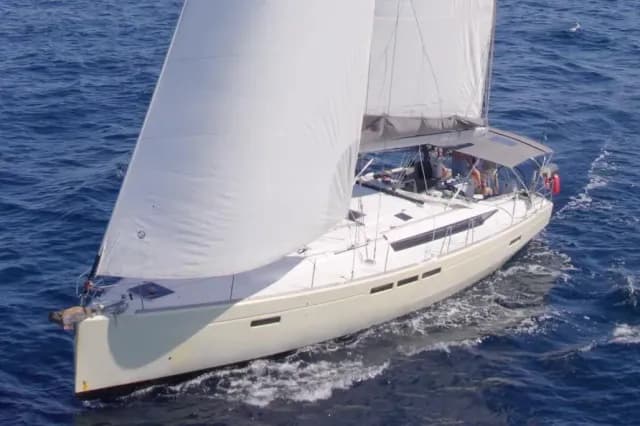
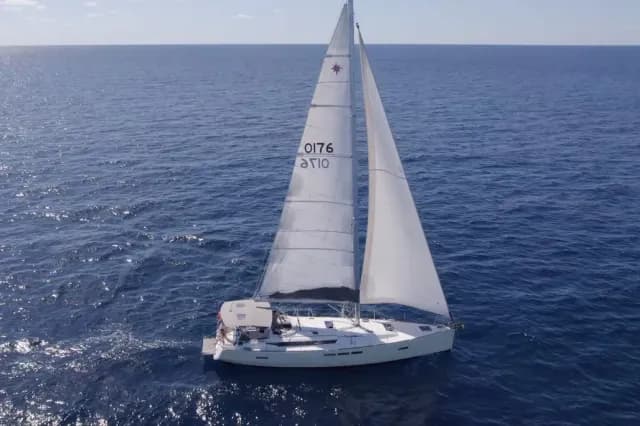
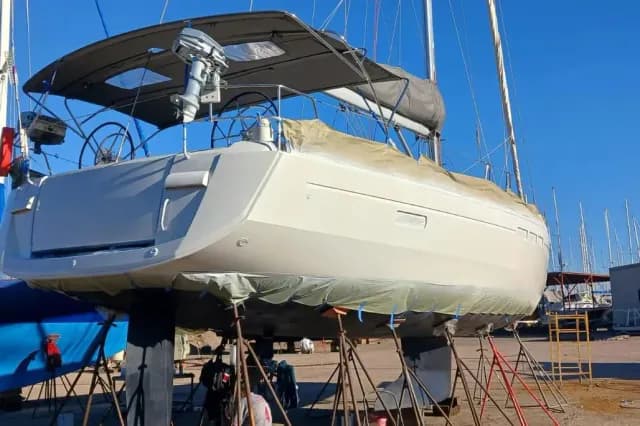
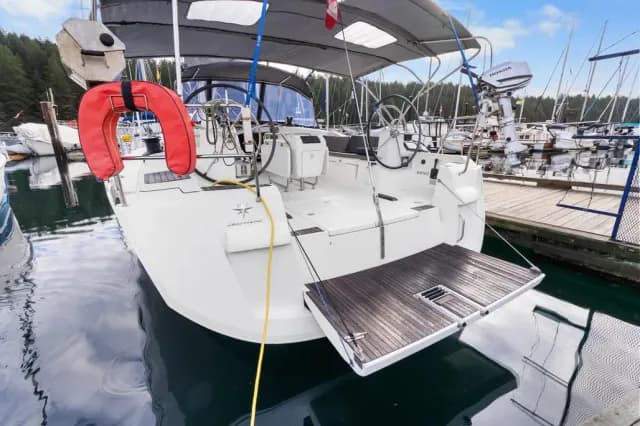
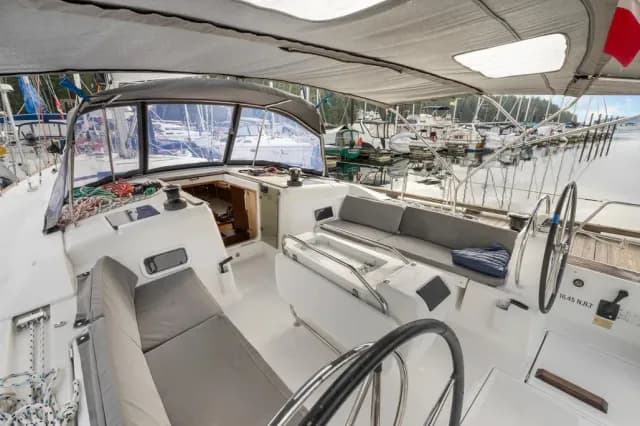
2015 Jeanneau Sun Odyssey 509
Sun Odyssey 509 Specifications
| Specification | Detail |
|---|---|
| LOA | 15.38 m (50 ft 6 in) |
| Hull length | 14.98 m (49 ft 1 in) |
| LWL | 13.92 m (45 ft 8 in) |
| Beam | 4.69 m (15 ft 5 in) |
| Draft (deep keel) | 2.28 m (7 ft 6 in) |
| Draft (shoal keel) | 1.73 m (5 ft 8 in) |
| Light displacement | 13,900 kg (30,644 lbs) |
| Ballast | 4,300 kg (9,480 lbs) cast iron |
| Ballast ratio | 31% |
| Mainsail area | 61 m² (657 sq ft) |
| Genoa area | 72 m² (775 sq ft) |
| Total upwind sail area | 133 m² (1,432 sq ft) |
| Code 0 (optional) | 97 m² (1,044 sq ft) |
| Mast height from DWL | 21.43 m (70 ft 4 in) |
| Engine | Yanmar 4JH4-TE, 75 HP turbocharged diesel |
| Drive | Saildrive |
| Fuel capacity | 240 litres (63 US gal) |
| Water capacity | 615 litres (162 US gal) |
| Holding tank | 80 litres (21 US gal) |
| Cabin layouts | 3-cabin / 4-cabin / 5-cabin |
| Heads | 2 (owner) / 3 (charter) |
| Naval architecture | Philippe Briand |
| Interior design | Garroni Design |
| Builder | Jeanneau (Groupe Beneteau) |
| Build location | Les Herbiers, France |
| CE category | A (Ocean) |
| Production years | 2012–2016 |
The numbers describe a well-proportioned cruising monohull with genuine ocean capability. At 13,900 kg light displacement with a 31% ballast ratio, the 509 carries enough weight low down for a comfortable, stable motion in a seaway without sacrificing performance. The 2.28 m deep keel provides excellent windward ability — a meaningful advantage for owners who actually sail rather than motor between anchorages. The shoal keel option at 1.73 m opens up shallower cruising grounds without dramatically compromising pointing ability.
The 240-litre fuel capacity is notably modest for a 50-foot yacht — adequate for harbour manoeuvres and coastal motorsailing, but limited for extended passage-making under power alone. This is a boat designed to sail. The 615-litre water capacity, by contrast, is generous and supports extended cruising for a couple or small family. The single 75 HP Yanmar turbocharged diesel with saildrive is well-matched to the hull — providing reliable performance under power including the ability to complete a 360-degree turn within the boat’s own length. The CE Category A Ocean certification confirms the 509’s offshore credentials.
How Does the Sun Odyssey 509 Sail?
Upwind: In a SAIL Magazine sea trial conducted in approximately 12 knots of true wind on Biscayne Bay, the Sun Odyssey 509 achieved 6.5 knots close-hauled at 55 degrees apparent wind angle. The helm was described as “light and well-balanced” — the 31% ballast ratio and Briand’s hard-chine hull working together to keep the boat flat and tracking true. In stronger conditions of 15–18 knots true wind, a Cruising World test recorded 8.5 knots upwind with the 125% genoa and in-mast furling mainsail — impressive numbers for a production cruiser of this displacement.
Reaching: This is where the Briand hull design excels. In 15–18 knots of true wind, the 509 achieves 9 knots on a broad reach. Reefed in 15 knots, a test reviewer noted it was “practically impossible to make less than 7 knots” on any point of sail — testimony to the efficiency of the hull form and the 1,432 sq ft of upwind sail area. With the optional Code 0 deployed in moderate conditions, reaching performance extends further, making the 509 a genuine passage-maker that covers distance under canvas rather than relying on the engine.
Light air: The 13,900 kg displacement and moderate sail area mean the 509 needs 8–10 knots of true wind to deliver a satisfying sailing experience. Below that threshold, a Code 0 or asymmetric spinnaker transforms performance. Boats specified with in-mast furling sacrifice some mainsail efficiency due to the hollow leech required by the furling drum — a trade-off that several reviewers noted. Slab-reefing boats with a full-battened mainsail have a meaningful advantage in both light air and upwind pointing.
Under power: The single 75 HP Yanmar delivers 7.2 knots at a comfortable 2,000 RPM cruise, rising to 9.1 knots at maximum revolutions — approaching the 9.06-knot theoretical hull speed. Backing is described as “steady and predictable.” The optional POD 120 joystick docking system provides 360-degree manoeuvring control, making close-quarters work significantly easier for single-handed or short-handed sailors. The limited 240-litre fuel tank means range under power is approximately 400–500 nautical miles at economy cruise — planning fuel stops is essential for any extended coastal passage.
Overall assessment: The Sun Odyssey 509 is a genuine sailing yacht that rewards active helming. The Briand hull is quick, well-mannered, and balanced — characteristics that differentiate it from the comfort-first approach of some competitors. In reaching and moderate upwind conditions it is genuinely fast for a production cruiser. The twin helm stations provide excellent visibility and a satisfying sailing position, though the shared winch arrangement (primaries handle both genoa sheets and the double-ended mainsheet) requires some forethought when short-handed. For buyers who prioritise sailing performance alongside cruising comfort, the 509 delivers on both counts.
Interior Layout & Living Aboard
The Sun Odyssey 509 was offered in three primary configurations: a 3-cabin owner’s version with a spacious forward master suite featuring an island double berth and en-suite head, two aft double cabins, and a large shared head; a 4-cabin version that splits the forward area into two V-berth cabins; and a 5-cabin charter version that maximises berths for revenue. The 3-cabin owner’s version, with its generous forward suite and substantial hanging storage, is the most sought-after layout on the used market for private buyers.
The hard chines aft are not merely a performance feature — they widen the stern to create aft cabins that feel like proper bedrooms rather than the coffin-like quarters found on many 50-foot monohulls. Headroom throughout is 1.98 m (6 ft 6 in), and the single-level interior eliminates the trip hazards of door sills and half-steps that complicate movement on other boats in a seaway. The Alpi veneer gives the interior a warm, modern character without the maintenance demands of real teak.
The T-shaped galley is positioned to port, large enough for two cooks to work simultaneously — a practical detail for extended cruising. A double stainless steel sink, two-burner stove with oven, and 12V refrigeration are standard. A separate “tea galley” near the companionway provides a drinks fridge and cutlery drawer for cockpit entertaining without disrupting meal preparation below — a thoughtful Jeanneau touch that owners consistently praise.
The cockpit is one of the 509’s strongest features. It comfortably seats eight for dining around the large drop-leaf table, with five dedicated storage lockers and space for twelve or more when socialising. The motorised fold-down transom creates a full swim platform with hot and cold shower — a feature that was ahead of its time when the 509 launched and remains highly desirable. The walk-through between the twin helms provides clear access to the swim platform, though the centreline backstay does require the crew to duck when passing between helms.
For liveaboard cruising, the 509 offers a practical platform. The 615-litre water capacity is generous for a monohull of this size, and the solid GRP hull construction is low-maintenance. Storage is adequate for coastal cruising but can feel constrained on extended offshore passages — creative use of under-berth and salon locker space is essential. Ventilation through hull ports and deck hatches is effective in temperate climates; in the tropics, air conditioning becomes a near-essential addition.
Sun Odyssey 509 Ownership: What to Expect
As a discontinued model, the Sun Odyssey 509 is exclusively a used-market purchase. The good news is that Jeanneau, as part of Groupe Beneteau, maintains strong parts availability through its global dealer network. The Yanmar 4JH4-TE engine is widely supported worldwide, and standard rigging and hardware components are readily available. The principal cost areas for ownership are as follows:
- Insurance: 1.0–2.0% of hull value. On a boat insured at €200,000, this translates to approximately €2,000–€4,000 per year. Mediterranean-only cruising sits at the lower end; Caribbean hurricane-zone coverage commands a premium.
- Marina berth: A 50-foot monohull commands standard berth fees — considerably less than a catamaran of equivalent length. Mediterranean marinas range from €6,000–€20,000 per year depending on location (Croatia at the lower end, Côte d’Azur at the top). UK south coast marinas charge £8,000–£15,000 per year.
- Engine servicing: The single Yanmar 4JH4-TE requires annual servicing at approximately €500–€1,500. Saildrive seals should be inspected annually and replaced every 5–7 years. Major service intervals are straightforward given the single-engine configuration.
- Haul-out and antifouling: €2,000–€4,000 for a 50-foot monohull — significantly less than the catamaran equivalent due to the simpler hull geometry and reduced underwater area.
- Standing rigging: Rigging should be inspected annually and replaced every 10–12 years. For boats from 2012–2014, rigging replacement is now due or overdue — budget €5,000–€8,000 for a full re-rig including the twin-spreader rig, all shrouds, and forestay.
- Approximate total: €15,000–€35,000 per year depending on location, usage pattern, and whether the boat is berthed in a marina or anchored out.
A significant number of Sun Odyssey 509s on the used market are ex-charter boats from Sunsail and other charter operators. These typically carry higher engine hours and more cosmetic wear, but benefit from comprehensive service histories maintained by the charter management company. Ex-charter examples trade at a significant discount to privately owned boats — often 30–50% below equivalent private-use examples of the same year.
The modest 240-litre fuel capacity is a running cost advantage — fill-ups are inexpensive, and the boat’s sailing performance means the engine sees less use than on comfort-oriented competitors. Annual maintenance costs are lower than for catamarans of equivalent size, making the 509 an accessible entry point to 50-foot sailing.
How to Buy a Sun Odyssey 509: What to Look For
Model years and pricing: Production ran from 2012 to approximately 2016, with the Sun Odyssey 519 introduced as successor. The oldest boats are now 14 years old, and all purchases are on the secondary market. Used pricing ranges from approximately €93,000 for early ex-charter examples to €329,000 for late-model, well-equipped private boats. A well-maintained 2014–2015 private example with good equipment typically trades at €180,000–€240,000 — exceptional value for a CE Category A, Philippe Briand–designed 50-footer.
Known Issues to Inspect
- Shared primary winches: The primary sheet winches handle both genoa sheets and the double-ended mainsheet, with no space for secondary winches. This is a functional limitation for short-handed sailing and can be a frustration when tacking in gusty conditions. Verify the winch condition carefully — these components see heavy use.
- Centreline backstay: The backstay obstructs the walk-through between twin helms and to the swim platform. This is a design characteristic rather than a defect, but it affects cockpit flow and can be an annoyance for entertaining.
- Rudder bearing wear: A known service item across the Sun Odyssey range. Check for play in the rudder by pushing the bottom of the rudder blade side to side during haul-out. Upgraded ball bearing replacements are available and well-documented on the Jeanneau Owners Forum.
- Non-slip deck coating: Reports of deck coating wear and degradation on Jeanneau models of this era. Inspect all deck surfaces carefully, particularly around the helms and in high-traffic areas.
- In-mast furling compromise: Boats specified with in-mast furling have a hollow-leech mainsail that reduces sail efficiency compared to slab-reefing versions. If the boat has in-mast furling, inspect the furling mechanism, sail condition, and consider the performance trade-off against the convenience factor.
- Low lifelines: The lifelines are lower than on some competitors, which can be a safety concern for taller crew members. Check that all stanchions are secure and the lifeline tension is correct.
Equipment That Adds Value
When assessing a used Sun Odyssey 509, the following additions represent genuine added value: upgraded electronics (chartplotter, radar, AIS), a Flexofold folding propeller (reduces drag under sail), solar panels, a watermaker, the optional POD 120 joystick docking system, electric primary winches, davits with dinghy, a Code 0 or asymmetric spinnaker, and replaced standing rigging with documentation. A boat fitted with the majority of these items is worth a meaningful premium over a base-specification example, particularly given the age of the fleet.
Ex-Charter Considerations
A large proportion of 509s on the brokerage market are former Sunsail fleet boats. These offer significant savings but require careful inspection: engine hours, saildrive condition, sail wear, and cosmetic degradation from years of charter use. Budget €10,000–€20,000 to bring an ex-charter boat to private-ownership standard — covering new upholstery, sail servicing or replacement, and systems refreshment. The 5-cabin charter configuration is less desirable for private use; the 3-cabin owner’s version commands a premium.
Surveying a Monohull
A pre-purchase survey should include: hull and deck condition (the solid GRP hull below the waterline and balsa-cored deck above), keel bolt integrity and alignment, rudder bearing play, saildrive seal condition and service history, engine compression test and oil analysis, standing rigging condition and age, all through-hull fittings and seacocks, and a sea trial in at least moderate conditions. The Prisma Process injection-moulded deck construction is generally robust, but moisture meter readings across the deck are essential to confirm core integrity. Ensure the surveyor checks all chainplate areas for stress cracking in the fibreglass.
Sun Odyssey 509 vs Competitors
The 50-foot production cruising monohull segment was fiercely contested during the 509’s production years, with French, German, and Scandinavian builders all offering compelling alternatives. On the used market today, the 509 competes with contemporaries from the same era and, on value alone, with newer boats at substantially higher prices.
Sun Odyssey 509 vs Beneteau Oceanis 51.1
The most direct French rival — and a sibling within Groupe Beneteau. The Oceanis 51.1 (introduced 2018) replaced the Oceanis 50, which was the 509’s direct contemporary. The Oceanis takes a more comfort-oriented approach: wider beam, larger interior volume, and a greater emphasis on living space over sailing performance. The 509 counters with superior upwind ability thanks to the Briand hull form, a lighter displacement, and a more engaging helm feel. For buyers who prioritise sailing, the 509 is the better boat. For buyers who prioritise space and comfort at anchor, the Oceanis merits consideration. On the used market, the 509 offers outstanding value given its age-related depreciation.
Sun Odyssey 509 vs Bavaria Cruiser 51
The Farr Yacht Design–drawn Bavaria is the value proposition in this segment, typically priced below equivalent Jeanneaus both new and used. The Bavaria offers a cavernous interior and competitive sailing performance, but build quality and fit-and-finish are generally regarded as a step below the French and German competition. The 509’s Briand hull, more refined interior joinery, and stronger residual values make it the more complete package for buyers who plan to keep the boat long-term. The Bavaria is the budget entry point to 50-foot sailing.
Sun Odyssey 509 vs Hanse 505
The Judel/Vrolijk–designed Hanse brings German engineering and a sporty character to the 50-foot segment. The Hanse 505’s larger hull ports flood the interior with light, and the self-tacking jib option simplifies short-handed sailing. Build quality is consistently well-regarded. The 509 offers a more traditional rig layout with greater sail area, the motorised swim platform, and arguably better cockpit ergonomics for entertaining. Both are excellent cruising yachts; the choice often comes down to sailing style preferences and which interior design resonates more strongly with the buyer.
Sun Odyssey 509 vs Dufour Grand Large 500
The Felci-designed Dufour is another strong French contender, with an innovative interior layout that maximises use of the hull volume. The Dufour’s performance under sail is competitive with the 509, and the build quality is well-regarded. Where the 509 edges ahead is in cockpit design — the twin-helm layout, drop-down transom, and generous cockpit volume create a superior outdoor living space. The Dufour counters with a more modern interior and often a lower used price. Both are worth inspecting; the choice is largely a matter of which boat feels right when you step aboard.
Sun Odyssey 509 vs Sun Odyssey 519
The 509’s direct successor deserves consideration. The 519 (2016 onwards) brought a wider swim platform, an optional bowsprit for Code 0 deployment, and updated interior styling. The hull DNA is evolutionary rather than revolutionary — still Briand-designed, still the same fundamental hull concept. The 519 commands a significant premium on the used market (typically €80,000–€150,000 more for equivalent condition and age). For buyers who want the latest specification and are willing to pay the premium, the 519 is the obvious choice. For buyers who prioritise value and are content with the original specification, the 509 offers the same sailing DNA at a substantially lower price.
For a full interactive depreciation comparison between the Sun Odyssey 509 and competing models, visit the Hulls.io Market Intelligence tool.
Jeanneau Sun Odyssey 509 Value Retention
Newest vintage = 100%. Older vintages shown as % of that price.
Based on median asking prices by model year. The newest model year in our dataset is used as the 100% reference point. The curve is smoothed so retention never increases as age increases — hover over data points to see raw values. Shaded band shows the 25th–75th percentile price range. Figures reflect asking prices from tracked listings, not final sale prices.