


1 Prout Catamaran for Sale
Browse our 1 Prout catamaran listing and learn more about Prout, the company that built them
Show 3 specialties
Prout Buyer's Guides
(1 guide)Updated 24 July 2026 · By Hulls.io Editorial
About Prout
Prout is one of the most historically significant names in multihull sailing — the British yard that did more than any other to turn the catamaran from a beach-racing curiosity into a genuine oceangoing cruiser. Founded on Canvey Island, Essex, in 1935 as a canoe and dinghy builder, G. Prout & Sons was transformed by brothers Roland and Francis Prout, Olympic canoeists who lashed two kayaks together in 1947 and never looked back. Their Shearwater III became the world's first production catamaran, with more than 2,000 built, and the Prout-built Rehu Moana carried Dr David Lewis and his family around the world in the mid-1960s — the first circumnavigation by a multihull. Over the following four decades Prout built more than 3,000 catamarans before the company finally closed in the early 2000s, leaving behind a fleet of boats still crossing oceans today.
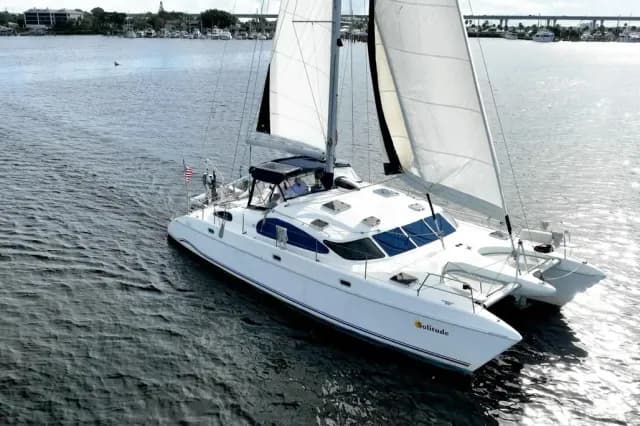
What defines a Prout is a design philosophy almost opposite to the modern charter catamaran. Where today's cats chase interior volume and flush-deck styling, Prout chased sea-kindliness and shorthanded simplicity. The signature feature is the rig: the mast is stepped well aft, over the main beam, carrying a small, easily handled mainsail and a large low-aspect genoa that does most of the driving. Bringing the rig aft keeps weight and pitching loads out of the bows and puts every sheet, halyard and reefing line within reach of the cockpit — one person can sail a big Prout comfortably. Beneath the bridgedeck runs the other Prout hallmark, a central canoe-shaped "nacelle" that adds buoyancy, interior headroom and reserve stability. Hulls were laid up in heavy solid GRP — famously overbuilt — giving the boats a reputation for bulletproof durability and a low, purposeful profile that shrugs off weather rather than presenting a slab side to it.
The definitive Prout is the Snowgoose 37, the boat most people picture when the name comes up. Roughly 500 were built, mostly through the 1980s, and it is credited with more ocean circumnavigations than any other production catamaran of its era — a genuinely proven bluewater design that trades outright speed and space for seaworthiness and self-sufficiency. Around it sat a full range: the compact Quest 31 and 33, the Event 34, the popular Snowgoose 35 and later Snowgoose Elite, the Escale 39, and the larger Prout 45 and 46 that took the marque toward more contemporary accommodation. Prout also built the Quasar 50 and, in power, the Panther motor-catamaran line. It was a Prout — the Colin Mudie-designed Rehu Moana — that first proved a catamaran could safely circle the globe, and the yard spent the next half-century building boats to live up to that reputation.
Prout's end was drawn out. After a change of ownership the company entered receivership in September 2001, and a brief attempt to keep two models alive — including moving larger-boat production to Thailand — failed, with the business declaring bankruptcy again in early 2002. The designs did not die with it. Later that year Broadblue Catamarans, based near the old Prout plant, acquired what remained, hired former Prout staff, and continued building the Prout 38 under its own name; that boat evolved into the Broadblue 385, and the Broadblue range carried the Prout bloodline forward for years afterward. For buyers, this means the Prout name is now a used-market proposition — no new boats since the early 2000s — but one backed by an unusually well-documented design history and an active owners' community.
On the used market a Prout offers a lot of proven boat for the money. These are heavy, forgiving, ocean-capable cruisers with a devoted following, and prices sit well below those of equivalent-length modern catamarans. The trade-offs are the ones you would expect from the design and the age: the aft-mast, small-mainsail rig is easy and safe but not a strong upwind performer, freeboard and bridgedeck clearance are modest by current standards, and every boat afloat is now decades old. That makes a thorough survey essential — GRP moisture and osmosis, the condition and age of standing rigging and chainplates, bulkhead and nacelle bonding, deck-core integrity around fittings, and the state of engines and saildrives all deserve close attention. Historically Prout's peers were other British cruising-cat builders such as Catalac; today an owner cross-shops a used Prout against early Lagoon, Fountaine Pajot and Leopard hulls, choosing the Prout for its seaworthiness, simplicity and heritage rather than volume or resale liquidity.
1 Prout Catamaran For Sale
Prout Listings
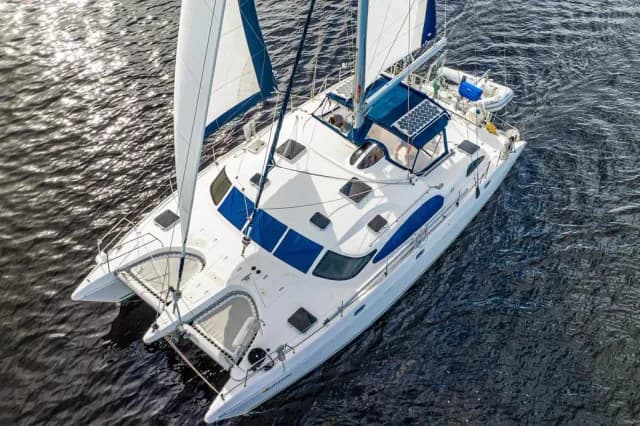
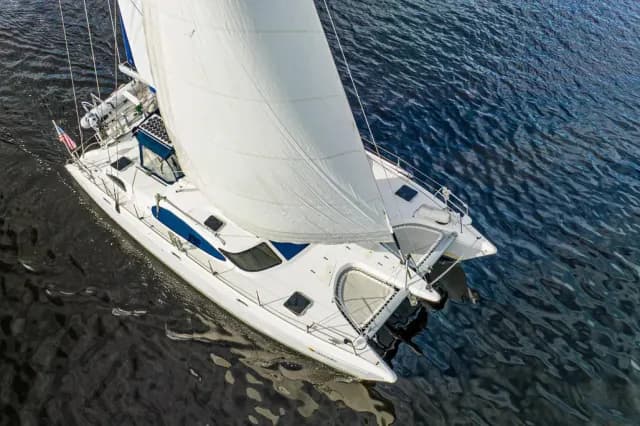
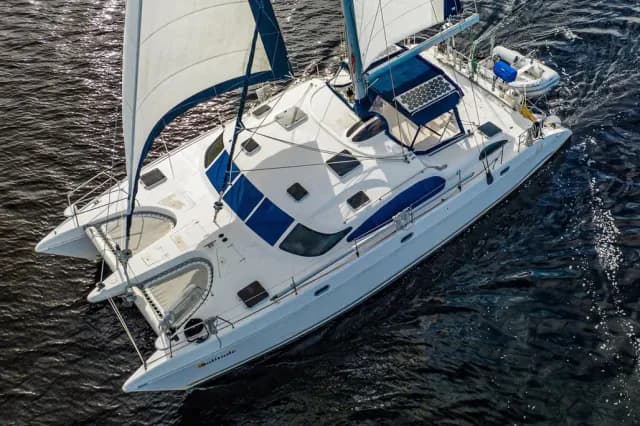
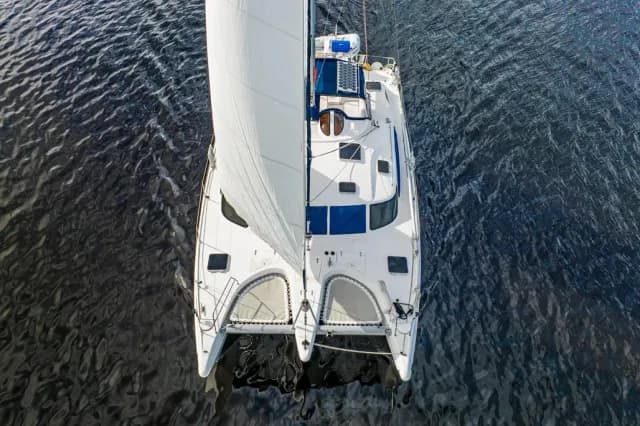
Frequently Asked Questions About Prout
Are Prout catamarans still being built?
No. Prout Catamarans entered receivership in 2001 and the business went bankrupt in 2002, ending nearly seven decades of production on Canvey Island, Essex. The designs were carried on by Broadblue Catamarans, which acquired the remnants of the company, retained former Prout staff and continued the Prout 38 as the Broadblue 38 (later the Broadblue 385). New Prout-branded boats are no longer built, so the brand is now an entirely used-market proposition.
What is the most famous Prout catamaran?
The Snowgoose 37 is by far the best-known Prout and the model most associated with the marque. Around 500 were built, mostly during the 1980s, and it is credited with more ocean circumnavigations than any other production catamaran of its generation. Its combination of heavy solid-GRP construction, an easily handled aft-stepped rig and genuine bluewater ability made it a favourite of long-distance cruisers, and good examples remain in demand today.
Are Prout catamarans good for bluewater and long-distance cruising?
Yes — it is what they were designed for. Prout hulls were laid up in heavy solid fibreglass and the boats prioritise sea-kindliness, reserve buoyancy (via the central nacelle) and shorthanded handling over speed or interior volume. The pedigree is hard to argue with: the Prout-built Rehu Moana completed the first multihull circumnavigation in the 1960s, and the Snowgoose 37 has since circled the globe many times over. They are slower and less voluminous than modern catamarans, but few production cats have a stronger ocean-crossing record.
What makes a Prout different from a modern catamaran?
Three things stand out. First, the rig: the mast is stepped well aft over the main beam, carrying a small mainsail and a large genoa, which keeps the sail controls by the cockpit and weight out of the bows — easy and safe to handle, if not a strong upwind performer. Second, the central "nacelle", a canoe-shaped pod under the bridgedeck that adds buoyancy and headroom. Third, the construction and proportions: heavy solid GRP and a low, weatherly profile rather than the tall freeboard and flush deck of a contemporary charter cat. Prout optimised for seaworthiness and simplicity where modern designs optimise for space and light-air speed.
Who designed Prout catamarans, and what was the Rehu Moana?
Most Prout catamarans were designed in-house by the Prout brothers, Roland and Francis, who pioneered the aft-rig, nacelle-hull formula. The Rehu Moana is a notable exception: it was a 40-foot (12.2 m) design by the English naval architect Colin Mudie, built by Prout at Canvey Island in 1963. Skippered by Dr David Lewis, it carried his family on the first circumnavigation of the globe by a multihull — a voyage begun in 1964 — cementing Prout's reputation for oceangoing catamarans.
What should I check when buying a used Prout?
Because every Prout is now decades old, a full survey is essential. Pay particular attention to GRP moisture readings and any osmosis in the hulls; the age and condition of the standing rigging, mast step and chainplates; bonding of the bulkheads and the nacelle to the hull; deck-core integrity around old fittings and fastenings; and the condition of the engines and saildrives. Provenance matters too — many Prouts have serious ocean miles, so a documented maintenance and refit history is a strong positive. Bought well and properly surveyed, a Prout is a lot of proven bluewater catamaran for the money.