


Sunseeker Predator 55 for Sale
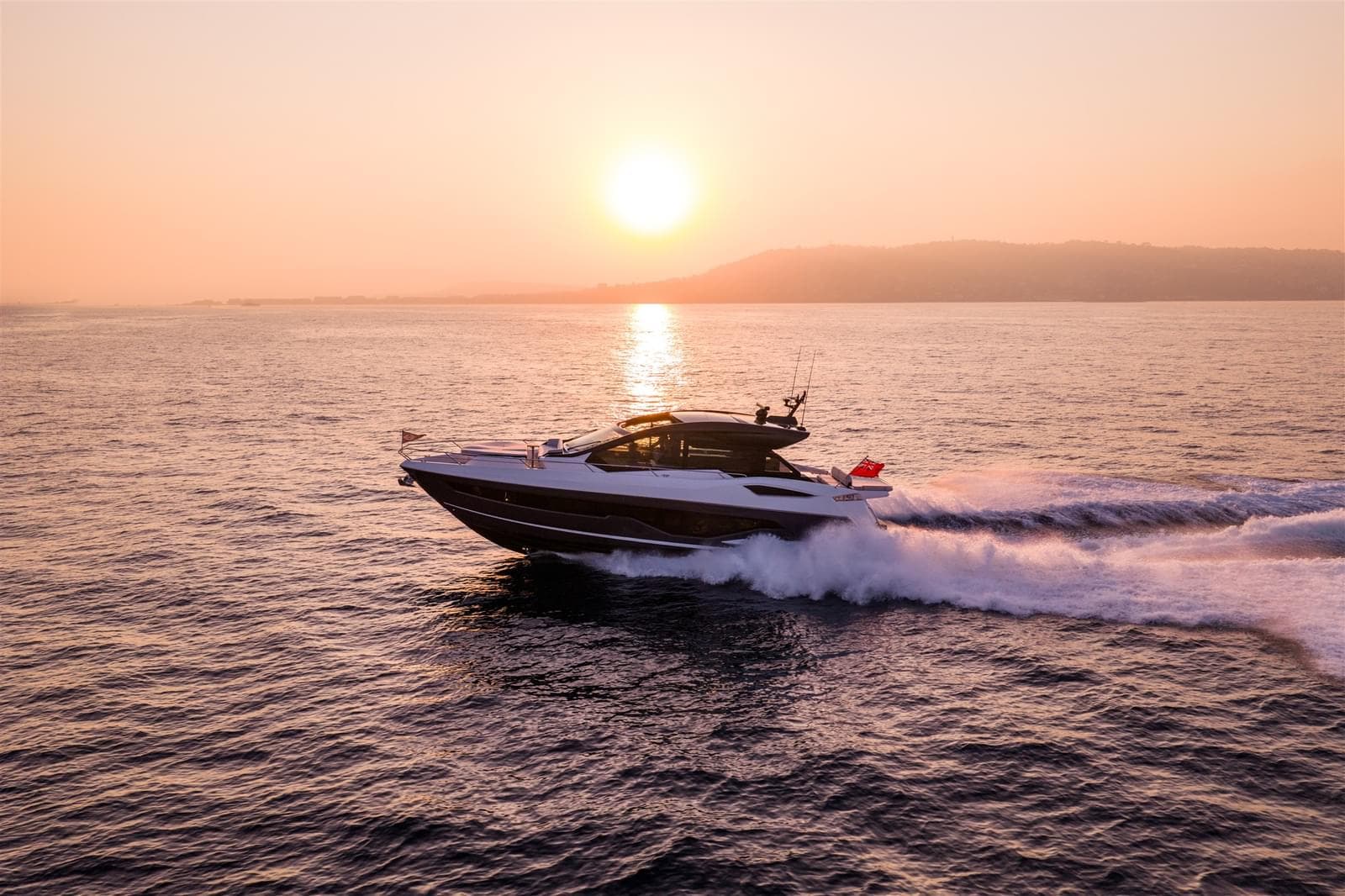
Sport Motor YachtWorld Yacht Trophies winner delivering 37 knots of sporty performance luxury with strong brand recognition. The Predator 55 is the sportier counterpart to the Manhattan, offering aggressive styling and exhilarating performance.
Show 1 award
Show 5 key features
Updated 10 June 2026 · By Hulls.io Editorial
The Sunseeker Predator 55: A Complete Guide
The Sunseeker Predator 55 is one of the most recognised sport cruisers in the 50–60 ft motor yacht segment. Now in its third generation, the Predator name has been part of the Sunseeker range for over two decades, and the 55 ft variant has evolved from a pure performance machine into a refined dual-purpose cruiser that balances speed, comfort, and open-air living in a way few competitors can match. The current model, launched at the Cannes Yachting Festival in September 2024, represents a fundamental rethink of the platform — wider beam, Volvo IPS pod drive, and a signature 2.5 m × 3.0 m retractable carbon-and-glass sunroof that transforms the saloon into an open-air space at the touch of a button.
The Predator 55’s lineage spans three distinct generations, each reflecting the priorities of its era. The original Predator 55 (2005–2009) was built around MAN V8 engines and Arneson surface drives, delivering over 44 knots — a genuine performance boat aimed at buyers who prized speed above all else. The Predator 55 EVO (2020–2024) pivoted sharply toward comfort, adopting Volvo D11 shaft drives and a more voluminous interior at the expense of outright pace, topping out at 32 knots. The current Mk2 (2024–present) synthesises both philosophies: Volvo IPS-950 pod drives restore the top speed to 35–36 knots while retaining the EVO’s emphasis on refined living spaces and ease of handling.
Sunseeker International has been building boats in Poole, Dorset since 1969. The company remains one of the few British motor yacht manufacturers still producing at volume, alongside its arch-rival Princess Yachts in Plymouth. Sunseeker’s market position sits firmly in the premium-luxury segment, competing with Italian yards like Azimut and Absolute, and fellow British builders Fairline and Princess. The Predator range — distinguished from Sunseeker’s Manhattan (flybridge) and Hawk (weekender) lines — has always been the brand’s sportiest offering, designed for owners who want to cover ground quickly without sacrificing creature comforts.
The current Predator 55 was designed in-house by Sunseeker’s design team in collaboration with Design Unlimited, the Southampton-based studio responsible for much of Sunseeker’s interior language. The hull form is entirely new, optimised for the IPS pod-drive system which demands specific running surfaces and shaft angles. The wider 4.95 m beam (versus 4.48 m on the EVO) creates noticeably more interior volume and improved stability at rest, while the carbon fibre elements in the hull construction help offset the weight penalty of the wider platform.
Hulls.io currently tracks 1 active listings for the Sunseeker Predator 55 across all generations, drawn from brokerages worldwide. With 0 tracked listings in our market intelligence database, we can provide buyers and sellers with detailed pricing trends, depreciation curves, and seasonal demand patterns across the model’s production history.
Showing 1–1 of 1 results
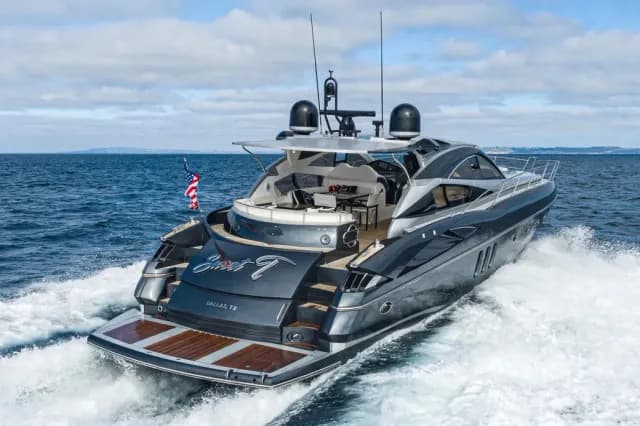
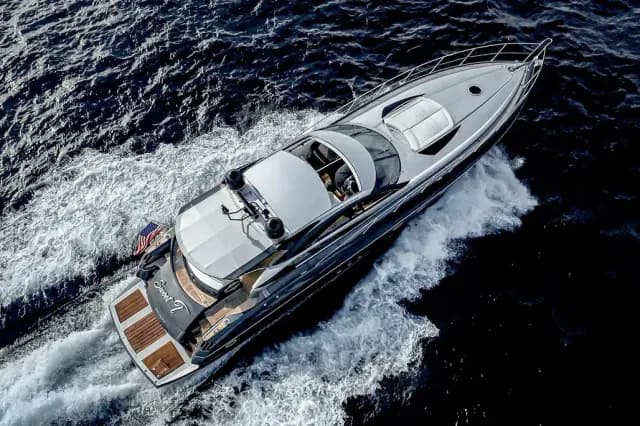
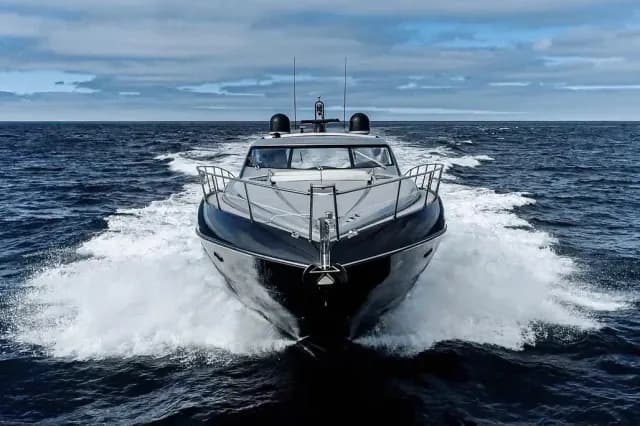
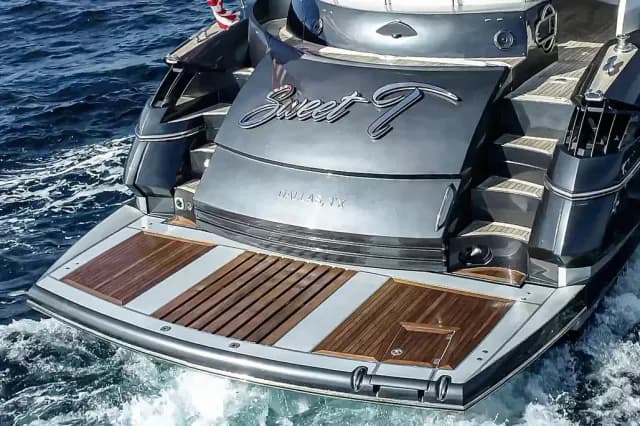
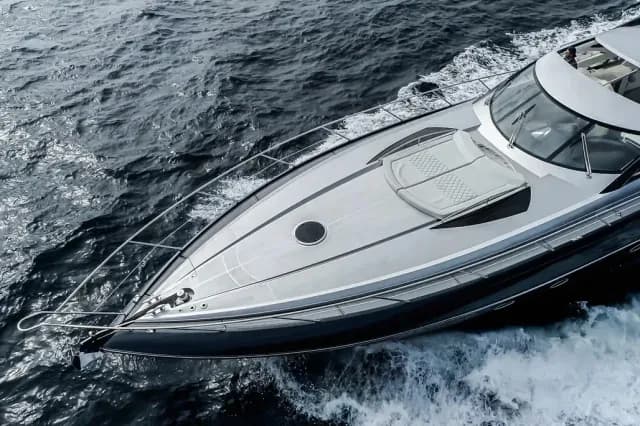
2005 Sunseeker Predator 68
Sunseeker Predator 55 Specifications
| Specification | Detail |
|---|---|
| LOA | 17.15 m (56 ft 3 in) |
| Beam | 4.95 m (16 ft 2 in) |
| Draft | 1.40 m (4 ft 7 in) |
| Displacement | 22,000 kg (48,502 lbs) |
| Hull construction | GRP with carbon fibre elements |
| CE category | B (Offshore) |
| Fuel capacity | 1,800 litres (476 US gal) |
| Water capacity | 430 litres (114 US gal) |
| Engines | 2× Volvo Penta IPS-950 (2 × 725 hp) |
| Top speed | 35–36 knots |
| Cruising speed | 28 knots |
| Range (cruising) | ~233 nm at 28 kn |
| Range (economy) | ~360 nm |
| Cabins | 2–3 (up to 6 guests) |
| Heads | 2–3 en suites + 1 day head |
| Key feature | 2.5 m × 3.0 m retractable carbon/glass sunroof |
| Design | Sunseeker in-house + Design Unlimited |
| Builder | Sunseeker International, Poole, UK |
| Production years | 2024–present (3rd generation) |
| Predecessor | Predator 55 EVO (2020–2024) |
| New price | ~€2,400,000 |
These specifications describe a boat that sits at the performance end of the 55 ft sport cruiser segment. The 1,450 hp combined output delivers a power-to-weight ratio that places the Predator 55 among the quickest boats in its class. The 1,800-litre fuel capacity is adequate for Mediterranean coastal cruising but notably smaller than several competitors — the Princess V55 carries 2,200 litres and the Azimut S6 carries 2,000 litres. At cruising speed, the ~233 nm range means careful fuel planning on longer passages. The CE Category B rating permits offshore operation in winds up to Force 8 and significant wave heights to 4 metres, but this is fundamentally a coastal cruiser rather than an ocean-crossing vessel.
Performance & Handling
At speed: The twin Volvo Penta IPS-950 pods deliver a top speed of 35–36 knots in standard trim, restoring the Predator name’s performance credentials after the EVO’s more modest 32-knot ceiling. The boat planes quickly and cleanly, with minimal bow rise during the transition from displacement to planing speeds. At 28 knots cruising speed, the ride is composed and predictable, with the deep-V hull form tracking well through moderate chop. The IPS system’s inherent efficiency — pods aligned with water flow rather than angled shafts — contributes to lower fuel consumption at all speeds compared to conventional shaft-drive installations of equivalent power.
Slow-speed handling: This is where the IPS system transforms the ownership experience. The joystick control at the lower helm provides intuitive, fingertip manoeuvring that makes Mediterranean stern-to berthing — the most stressful moment in many owners’ boating lives — genuinely manageable single-handed. The pods rotate independently through 360 degrees, enabling the boat to move sideways, pivot on its axis, and hold station in crosswinds. Owners consistently cite IPS manoeuvrability as the single greatest improvement over the shaft-drive EVO predecessor.
Ride quality: The Predator 55’s hull delivers an impressively quiet and comfortable ride for a performance-oriented boat. The GRP construction with carbon fibre reinforcement provides structural rigidity without excessive weight, and the hull’s variable deadrise transitions from a sharper entry at the bow to a flatter section aft, optimising both rough-water comfort and planing efficiency. Owner feedback consistently praises the ride as significantly quieter and softer than expected for a boat capable of 35+ knots.
Economy and range: At an economy cruise of approximately 18–20 knots, the Predator 55 can extend its range to roughly 360 nm. At full cruising speed of 28 knots, expect approximately 233 nm. These figures assume calm conditions and clean hull — real-world range with fouling, payload, and sea state will be 10–15% less. The fuel burn at 28 knots sits at approximately 200–220 litres per hour combined, which is competitive for the class but still represents a significant running cost.
Generational comparison: For buyers considering older Predator 55 variants, the performance character differs markedly. The original (2005–2009) with Arneson surface drives was a raw, loud, exhilarating 44+ knot machine aimed at speed enthusiasts. The EVO (2020–2024) was deliberately softer, a 32-knot comfort cruiser with conventional shaft drives that prioritised refinement over pace. The current Mk2 occupies the middle ground: fast enough to satisfy performance expectations, refined enough for extended cruising, and with the IPS system’s transformative low-speed handling as its decisive advantage.
Interior Layout & Living Aboard
The defining feature of the current Predator 55’s interior is the 2.5 m × 3.0 m retractable sunroof, constructed from carbon fibre and glass. When open, it transforms the main saloon from an enclosed cabin into a semi-alfresco space, flooding the area with natural light and fresh air. This is not a token sliding panel — the opening is large enough to fundamentally change the character of the room, and it has become the boat’s signature feature in marketing and owner discussions alike.
The Predator 55 is offered with a galley-up or galley-down configuration. The galley-up option places the kitchen on the main deck adjacent to the helm, creating a sociable single-level living space ideal for entertaining and day cruising. The galley-down option moves the kitchen below decks, freeing the main salon for a more expansive seating and dining arrangement. The galley-up layout is more popular with owners who use the boat primarily for day trips and weekend cruising, while the galley-down appeals to those planning extended stays aboard.
Below decks, the accommodation is configured as either two or three cabins, sleeping up to six guests. The master cabin is positioned amidships in the widest part of the hull, benefiting from the 4.95 m beam to create a genuinely spacious owner’s suite with en-suite head and separate shower. The VIP cabin forward is a full double, also with en-suite facilities. The optional third cabin is a twin-berth arrangement, practical for children or crew. Each head compartment is finished to a high standard with solid-surface countertops and quality fixtures — Sunseeker’s interior fit-out has always been a brand strength.
The cockpit provides a generous social area with a wet bar, seating for six to eight, and direct access to the bathing platform via a gate in the transom. The foredeck sunpad is another major outdoor living space, accessed via side decks that are wider than those on the EVO predecessor thanks to the increased beam. Headroom throughout the interior is approximately 1.95 m (6 ft 5 in), generous for a sport cruiser of this size.
The helm station features twin screens (typically Garmin or Raymarine), the Volvo EVC (Electronic Vessel Control) system, and the IPS joystick. The driving position is well designed for both seated cruising and standing operation during close-quarters manoeuvring. Visibility from the lower helm is good, though the raked windscreen can create reflections at certain sun angles — a minor but noted irritation in owner forums.
Sunseeker Predator 55 Ownership: What to Expect
Running a 55 ft sport cruiser is a significant financial commitment. The Predator 55 is not a charter boat in the conventional sense — it is overwhelmingly an owner-operated vessel, which means the full cost of ownership falls on a single party. The principal cost areas are as follows:
- Insurance: 1.5–2.0% of hull value. For a new Predator 55 insured at €2,400,000, this translates to approximately €36,000–€48,000 per year. Used examples at lower insured values will reduce this proportionally, but insurers often apply higher rates to older boats with higher-powered engines.
- Berthing: A 17 m motor yacht in the Mediterranean commands premium marina fees. The Côte d’Azur ranges from €20,000–€25,000 per year for an annual berth. The Spanish Mediterranean is more affordable at €12,000–€18,000. Croatian marinas range from €8,000–€15,000. UK south coast marinas charge approximately £12,000–£18,000 for a suitable berth.
- Engine servicing: Volvo IPS systems require specialist servicing, typically at Volvo Penta authorised service centres. Annual service costs for twin IPS-950 units run to approximately €5,000–€8,000 depending on hours and location. The IPS pods themselves require periodic seal inspection and replacement — a significant cost item when it arises. Owners are effectively locked into the Volvo service network, which is comprehensive in northern Europe and the Mediterranean but can be limited in more remote cruising grounds.
- Haul-out and antifouling: Annual haul-out, hull clean, and antifouling application for a 17 m motor yacht costs approximately €4,000–€7,000 depending on yard rates and paint specification. The IPS pods and their running gear require particular attention during antifouling.
- Winterisation: For boats kept in northern European waters, annual winterisation — engine preservation, water system drain-down, battery management, and protective covers — adds approximately €2,000–€4,000.
- Approximate total: €55,000–€95,000 per year for a new boat, scaling down with hull value for used examples. This excludes fuel, which at 200+ litres per hour at cruise adds significantly during active use.
Owner feedback — strengths: Ride quality in a seaway is consistently praised, with the Predator 55 delivering a quieter and more composed experience than many owners expect from a 35-knot boat. Build quality and interior finish meet expectations at this price point. The retractable sunroof transforms the open-air living experience. IPS manoeuvrability is universally lauded as a game-changer, particularly for owners stepping up from smaller boats. The galley-up/galley-down option gives genuine layout flexibility that competitors at this size rarely offer.
Owner feedback — concerns: Fuel capacity (1,800 litres) is smaller than key competitors, limiting range on longer passages and requiring more frequent fuel stops. HVAC system reliability is a recurring theme across the Sunseeker range, not specific to the Predator 55 but well-documented in owner forums. Volvo IPS service dependency means owners must plan maintenance around Volvo authorised centres. The Volvo EVC (Electronic Vessel Control) system has experienced teething issues on early deliveries, including intermittent screen glitches and calibration drift. The price premium over competitors like the Fairline Targa 53 GT is significant and not always justified by tangible specification differences.
How to Buy a Sunseeker Predator 55: What to Look For
Three generations, three very different boats: The most important thing for buyers to understand is that the Predator 55 name spans three fundamentally different vessels at very different price points. The original (2005–2009) is a raw performance machine now available for under £300,000 — tremendous value for a 44+ knot boat, but with running costs, engine hours, and drive system complexity that demand careful due diligence. The EVO (2020–2024) sits at £500,000–£800,000 on the used market, offering a more refined, comfort-oriented experience with conventional shaft drives. The current Mk2 is €2,400,000 new and has barely entered the used market. Each generation appeals to a different buyer with different priorities.
Original Predator 55 (2005–2009)
These boats are now 17–21 years old. At sub-£300,000, they offer extraordinary performance per pound, but the MAN V8 engines and Arneson surface drives are expensive to maintain and repair. Engine hours are critical — MAN V8s have a service life of approximately 2,000–3,000 hours before major overhaul. Arneson drives require specialist knowledge and parts availability can be challenging. Inspect the hull-to-deck joint, stringers, and structural bonding carefully on boats of this age. These are not beginner boats — the surface drive handling at speed demands experience and respect.
Predator 55 EVO (2020–2024)
The EVO generation is the sweet spot for many buyers: modern enough to have contemporary electronics, reliable Volvo D11 engines with shaft drives, and the comfort-focused interior that defined this generation. Used examples at £500,000–£800,000 represent substantial savings over new pricing. Key inspection points include shaft seal condition, rudder bearing play, and gel coat integrity — particularly around the bathing platform and transom where stress cracks can develop. Check the HVAC system thoroughly — compressor reliability and ducting quality are known weak points across the Sunseeker range.
Current Mk2 (2024–present)
Too new for a meaningful used market, but early adopters should pay attention to the Volvo EVC system’s software maturity. Volvo typically issues several firmware updates in the first 12–18 months of a new IPS installation, and ensuring the boat has the latest calibration and software is essential. The sunroof mechanism is a novel feature — inspect the tracks, seals, and motor operation carefully on any early example.
Key Inspection Points (All Generations)
- IPS pods (Mk2 only): Inspect pod seals, check for oil weeping, and verify service history. IPS pod replacement is a five-figure expense. Ensure all Volvo service intervals have been met.
- HVAC system: Run every zone, check compressor operation under load, inspect ducting for moisture damage. HVAC issues are the most common complaint across the Sunseeker range.
- Volvo service history: An unbroken Volvo Penta service record is essential. Gaps in service history should be treated as a red flag, particularly on IPS-equipped boats where the pod drive system’s longevity depends on correct maintenance.
- Gel coat and structural: Inspect the hull-to-deck joint, engine bed bonding, and transom structure. Check for stress cracking around cleats and mooring points. On older boats, pay particular attention to osmotic blistering below the waterline.
- Electronics: Verify all screens, sensors, and the Volvo EVC system function correctly. Replacement of integrated electronics packages on boats of this complexity is expensive.
Commissioning a Survey
A motor yacht survey at this level should include a full hull and structural inspection (out of water), engine and drive system assessment by a qualified marine engineer (Volvo IPS specialist for pod-drive boats), a sea trial covering full-speed runs, manoeuvring tests, and systems checks under load, and a detailed inventory of all equipment against the sales specification. Budget £2,500–£4,000 for a comprehensive survey of a boat in this size and complexity range. Do not attempt to save money by skipping the engine survey or sea trial — the cost of undetected problems on a twin-engine sport cruiser far exceeds the survey fee.
Sunseeker Predator 55 vs Competitors
The 55 ft sport cruiser segment is fiercely competitive, with several established manufacturers offering compelling alternatives. The Predator 55 does not exist in isolation, and an informed buyer should understand how it compares to the principal rivals across performance, specification, and value.
The Sunseeker vs Princess comparison is to motor yachts what BMW vs Mercedes is to cars — both British manufacturers, both based in the south of England (Poole and Plymouth respectively), both targeting the same buyer at every size bracket. The rivalry is intense, genuine, and provides buyers with a direct beneficiary: two companies constantly pushing each other to improve.
Sunseeker Predator 55 vs Princess V55
The Princess V55 is the Predator 55’s most direct competitor and the most frequently searched motor yacht comparison in the 50–60 ft segment. The V55 is larger at 17.81 m LOA, heavier at 27.5 tonnes, and carries more fuel at 2,200 litres — addressing the Predator’s range limitation directly. The Princess comes with shaft drive as standard (IPS optional), giving buyers a choice between conventional reliability and pod-drive manoeuvrability. In character, the V55 is a more traditional British cruiser — refined, understated, and comfort-oriented — versus the Predator’s sportier, more extrovert personality. The MBY (Motor Boat & Yachting) head-to-head video comparing these two boats generated massive viewer engagement, confirming that this is the comparison most buyers are making. On the used market, Princess V-class models tend to hold value slightly better in percentage terms, though Sunseekers are typically priced higher when new.
Sunseeker Predator 55 vs Azimut S6
The Azimut S6 is the Italian contender and the largest boat in this comparison. Powered by triple Volvo IPS-700 pods (versus the Predator’s twin IPS-950), the S6 takes a different approach to propulsion — three smaller engines providing redundancy and manoeuvrability at the cost of mechanical complexity. The hull features extensive carbon fibre construction, and an optional hybrid drive system positions it as the most technologically advanced boat in the segment. The S6 is more sport-flybridge than pure sport cruiser, offering a raised helm station with better visibility at the expense of a higher profile. It is the most expensive option here, but Azimut’s build quality and the triple-IPS system’s refinement make it a serious alternative for buyers who prioritise technology and innovation.
Sunseeker Predator 55 vs Fairline Targa 53 GT
The Fairline Targa 53 GT is the third British player in this segment and the one most often overlooked. It is the most compact and lightest of the group, with a top speed of 30–32 knots from conventional shaft drives. Where the Targa excels is accommodation: up to four cabins sleeping eight guests, making it the most practical option for families or those who regularly entertain overnight guests. The shaft-drive configuration means lower running costs and simpler maintenance than IPS systems, though at the expense of the Predator’s joystick manoeuvrability. Fairline’s Alberto Mancini-designed exterior styling gives the Targa a distinctive contemporary look, and build quality is competitive with both Sunseeker and Princess. Pricing tends to sit below the Predator 55, making it the value proposition in this comparison.
For a full interactive depreciation comparison between the Sunseeker Predator 55 and competing models, visit the Hulls.io Market Intelligence tool, where you can overlay pricing trends, track seasonal demand, and benchmark value retention across the entire 50–60 ft sport cruiser segment.
Sunseeker Predator 55 Value Retention
Newest vintage = 100%. Older vintages shown as % of that price.
Based on median asking prices by model year. The newest model year in our dataset is used as the 100% reference point. The curve is smoothed so retention never increases as age increases — hover over data points to see raw values. Shaded band shows the 25th–75th percentile price range. Figures reflect asking prices from tracked listings, not final sale prices.