


Azimut S6 Buyer’s Guide
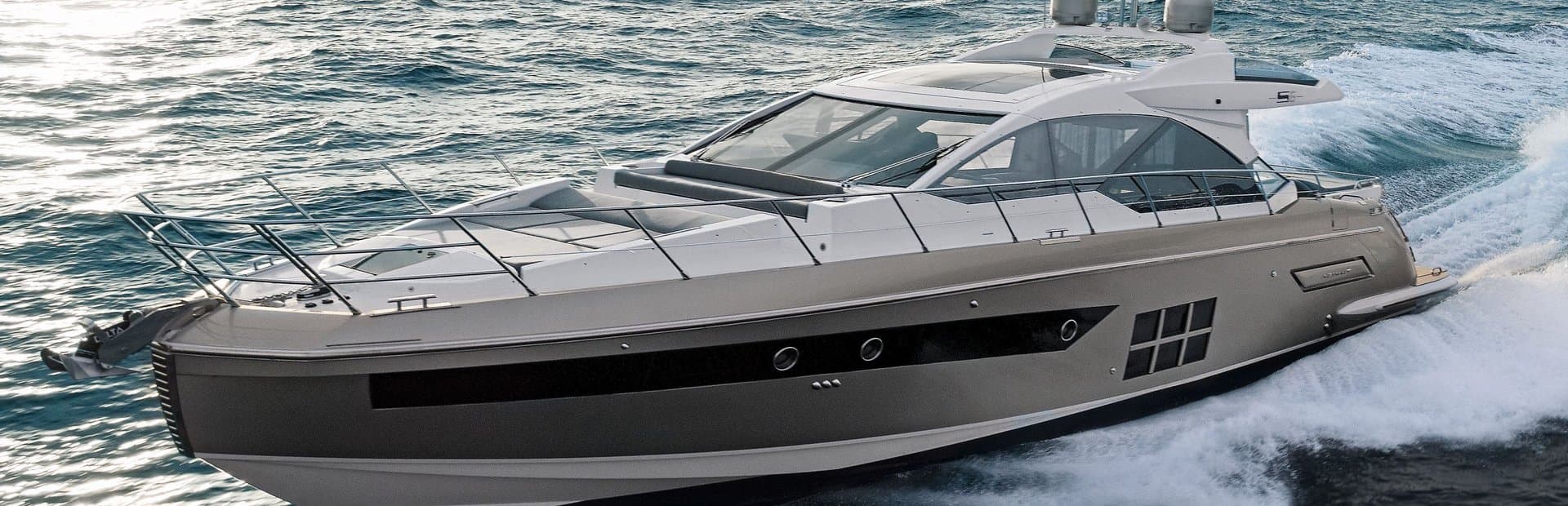
Sport CruiserThe sport cruiser line featuring carbon fibre innovation and Italian design leadership. The Azimut S Series delivers a sleek, low-profile aesthetic with cutting-edge technology and the kind of performance that makes every cruise an event.
Show 2 awards
Show 5 key features
Related models
Updated 10 June 2026 · By Hulls.io Editorial
The Azimut S6: A Complete Guide
The Azimut S6 is the boat that proved a 59-foot sport cruiser does not need to weigh 50 tonnes. Launched in 2019 by Azimut Yachts, the S6 introduced an approach to construction and propulsion that set it apart from every competitor in its segment: a carbon fibre superstructure bonded to a GRP hull, powered by three Volvo Penta IPS 700 pods instead of the conventional twin-engine layout used by virtually every rival. The result is a boat that weighs approximately 29,500 kg at full load — dramatically lighter than competitors such as the Princess V55 and Fairline Targa 53 GT, which tip the scales at 27,500 kg and 25,000 kg respectively despite being physically smaller vessels. That weight advantage translates directly into superior performance, better fuel economy, and a riding quality that belies the S6’s generous 59-foot length.
The S6 sits within Azimut’s “S Collection” — the yard’s sporty, low-profile cruiser range positioned between the entry-level Atlantis line and the full-displacement Magellano series. Stefano Righini penned the exterior, creating a sleek, aggressive profile with a pronounced reverse bow, sculpted hull windows, and an optional shortened sport flybridge (the Sportfly version) that adds a raised helm and sunpad without compromising the coupé’s clean lines. Francesco Guida designed the interior, while the hull form was developed by P.L. Ausonio Naval Architecture — the same studio responsible for hull design across much of the Azimut range.
The carbon fibre construction is not cosmetic. The deckhouse, stern structure, transom, and main deck aft sections are all built from carbon fibre composite, reducing the weight of the upper structure by approximately 30% compared to a conventional GRP build. This lowers the centre of gravity meaningfully, which in turn reduces roll by an estimated 15% and improves dynamic stability at speed. The S6 won the Motor Boat Awards 2021 “Best Sportscruiser Over 40ft” category, with judges specifically citing the carbon construction and triple IPS system as decisive factors.
Azimut Yachts was founded in 1969 by Paolo Vitelli and is headquartered in Avigliana, near Turin, Italy. The company is one of the world’s largest private luxury yacht builders, consistently ranking among the top three globally by production volume. The S6 is produced at Azimut’s Avigliana facility, where the yard’s investment in carbon fibre technology and vacuum infusion processes has enabled the kind of lightweight construction that smaller yards cannot easily replicate at production scale.
Hulls.io currently tracks 0 active listings for the Azimut S6 across all variants, drawn from brokerages worldwide. With 0 tracked listings in our market intelligence database, we can provide buyers and sellers with detailed pricing trends, depreciation curves, and seasonal demand patterns across the model’s production history.
Azimut S6 Specifications
| Specification | Detail |
|---|---|
| LOA | 18.00 m (59 ft 1 in) |
| Beam | 4.75 m (15 ft 7 in) |
| Draft | 1.61 m (5 ft 3 in) |
| Displacement (full load) | 29,500 kg (65,036 lbs) |
| Hull material | GRP with carbon fibre superstructure |
| CE category | B (Offshore, up to 200 nm) |
| Fuel capacity | 2,600 litres (687 US gal) |
| Water capacity | 590 litres (156 US gal) |
| Engines | 3× Volvo Penta D8 IPS 700 (550 hp each, 1,650 hp total) |
| Top speed | 35 knots |
| Cruising speed | 25–30 knots |
| Range (cruising) | ~275 nm at 30 knots |
| Cabins | 3 (master amidships, VIP forward, starboard twin) |
| Heads | 2 en-suite + 1 day head |
| Exterior designer | Stefano Righini |
| Interior designer | Francesco Guida |
| Hull design | P.L. Ausonio Naval Architecture |
| Builder | Azimut Yachts, Avigliana, Italy |
| Versions | Coupé and Sportfly |
| Production | 2019–present |
The specification tells a story of engineering ambition. The triple IPS 700 configuration is unusual in the sport cruiser segment — most competitors use twin larger engines to achieve similar total horsepower. Azimut’s rationale is that three smaller pods distribute thrust more evenly across the hull, reduce individual engine loading, and provide redundancy (the boat can return to port on two engines if one fails). The 2,600-litre fuel capacity is the largest in this competitive set, contributing to a cruising range of approximately 275 nm at 30 knots. The CE Category B rating permits offshore operation in winds up to Force 8 and significant wave heights to 4 metres, though the S6 is primarily designed for Mediterranean-style coastal cruising rather than open-ocean passages.
Performance & Handling
At speed: The triple Volvo Penta IPS 700 installation delivers 1,650 hp to three independently steerable pods, pushing the S6 to a top speed of 35 knots. The boat transitions onto the plane cleanly and quickly, with minimal bow rise — a direct benefit of the lightweight carbon superstructure keeping mass out of the upper works. At a fast cruise of 30 knots, the ride is composed and remarkably quiet for a boat of this size. The three-pod configuration distributes thrust more evenly than a twin setup, which contributes to a flatter running attitude and reduced vibration through the hull.
Fuel economy: This is where the S6’s weight advantage pays its most tangible dividend. At 30 knots cruise, total fuel consumption is approximately 67 US gallons per hour (254 litres per hour) across all three engines. For a 59-foot sport cruiser making 30 knots, this represents a 20–30% improvement over competitors that rely on heavier twin-engine configurations to achieve similar speeds. The 2,600-litre tank gives a realistic cruising range of approximately 275 nm at 30 knots — comfortably enough for a run from Barcelona to Ibiza and back, or a Mediterranean island-hopping itinerary without daily refuelling.
Slow-speed handling: Three IPS pods with independent vectoring give the S6 exceptional close-quarters manoeuvrability. The Volvo joystick provides intuitive control — sideways movement, pivot turns, and station-holding in crosswinds are all straightforward. Stern-to berthing in crowded Mediterranean marinas, the scenario that causes more owner anxiety than any other, is genuinely manageable single-handed. The triple-pod arrangement actually provides finer directional control than a twin setup, as the centre pod can vector independently of the outer pair.
Ride quality and stability: The carbon fibre superstructure’s 30% weight reduction over conventional GRP lowers the centre of gravity appreciably, and the resulting 15% reduction in roll is noticeable at anchor and at slow speeds in beam seas. At planing speeds, the P.L. Ausonio hull form — with its variable deadrise and sharp entry — handles moderate chop comfortably. The S6 feels lighter and more agile than its 59-foot length suggests, a quality that owners frequently compare favourably to boats 10 feet shorter. The hull design rewards smooth, progressive throttle inputs and holds its line well through turns at speed.
Interior Layout & Living Aboard
The Azimut S6 is configured with a galley-up layout on the main deck, placing the kitchen adjacent to the saloon and helm station. This creates a single, sociable living space that flows naturally from the interior through to the cockpit — a layout that suits day cruising and entertaining, where the cook is part of the conversation rather than isolated below decks. Francesco Guida’s interior design uses light woods, neutral fabrics, and carefully placed natural light from the hull windows and overhead glazing to create an atmosphere that feels larger and airier than the 4.75 m beam might suggest.
The cockpit is the S6’s outdoor centrepiece. It is generously proportioned for a sport cruiser, with a large dining table, wet bar, and direct access to the bathing platform via a full-width transom that can be configured with a hydraulic garage for a tender or jet ski. The cockpit’s relationship to the saloon is well resolved — with the aft doors open, the two spaces merge into a single entertaining area that comfortably hosts a dozen guests. On the Sportfly version, a carbon fibre sport flybridge adds a raised helm station with its own sunpad and seating area, creating a third distinct outdoor living zone.
Below decks, the S6 accommodates six guests across three cabins. The master stateroom is positioned amidships in the widest part of the hull, offering a full-beam layout with a centreline double berth, generous wardrobe space, and an en-suite head with separate shower stall. The VIP cabin forward is a full double with its own en-suite, while the third cabin to starboard features twin berths — practical for children or crew. A day head serves the main deck and cockpit, meaning overnight guests do not share facilities with day visitors. Headroom below is approximately 1.95 m (6 ft 5 in) throughout, generous for a sport cruiser.
The three-cabin layout is a notable advantage over several competitors in this size range. The Sunseeker Predator 55, for example, offers only two cabins as standard (three as an option), while the S6’s three-cabin arrangement is the default configuration. For owners who regularly cruise with family or entertain guests for weekends and longer, the extra cabin makes a material difference to the boat’s versatility.
Azimut S6 Ownership: What to Expect
Owning a 59-foot sport cruiser is a substantial financial commitment, and the Azimut S6’s triple-engine configuration introduces cost considerations that buyers should understand clearly before committing. Annual running costs typically fall in the range of $100,000–$250,000 depending on usage, location, and level of professional management:
- Insurance: 1.5–2.0% of hull value. For a boat insured at €1,400,000, this equates to approximately €21,000–€28,000 per year. Used examples at lower insured values reduce this proportionally.
- Berthing: An 18 m motor yacht commands premium marina fees. Mediterranean berths range from €15,000–€30,000+ per year depending on location, with the Côte d’Azur and Balearics at the upper end. US East Coast marinas typically range from $15,000–$25,000.
- Engine servicing: Three Volvo IPS 700 units require servicing at Volvo Penta authorised centres. Annual service costs for the triple installation run to approximately €8,000–€14,000 depending on hours and location. Three engines mean three sets of oil changes, impellers, anodes, and drive belts — a 50% increase in routine service costs compared to a twin installation. IPS pod seal inspection and replacement is a significant cost item when required.
- Haul-out and antifouling: Annual haul-out, hull cleaning, and antifouling for an 18 m motor yacht costs approximately €5,000–€9,000. Three IPS pods require individual attention during antifouling, adding to the yard time.
- Fuel: At 67 GPH at 30 knots cruise, a four-hour day outing consumes approximately 268 gallons. At current fuel prices, this represents a meaningful per-trip cost that active owners must budget for.
- Approximate total: $100,000–$250,000 per year depending on usage intensity, location, and whether the boat is professionally managed or owner-operated. Hands-on owners in cost-effective locations who use the boat moderately can keep costs toward the lower end of this range.
New pricing: The Azimut S6 Coupé lists from approximately €1,400,000 (ex-options), with the Sportfly version commanding approximately £1,600,000 as delivered. Options, VAT, and commissioning can add 15–25% to the base price. On the used market, 2019–2023 examples trade in the range of $1,000,000–$1,400,000 depending on year, hours, specification, and condition.
Owner feedback — strengths: The carbon fibre construction and its tangible effect on ride quality, performance, and fuel economy are the most frequently cited positives. Owners consistently describe the S6 as feeling “a class lighter” than its 59-foot length, with manoeuvrability that rivals boats ten feet shorter. The triple IPS redundancy provides peace of mind — the ability to limp home on two engines is a genuine safety advantage. Build quality and interior finish reflect Azimut’s position as one of the world’s leading luxury yacht builders.
How to Buy an Azimut S6: What to Look For
Coupé vs Sportfly: The first decision is which variant suits your cruising style. The Coupé is the cleaner, sportier profile with a lower centre of gravity and slightly better performance. The Sportfly adds a shortened sport flybridge with a raised helm station, additional sunpad, and a second social area on top — at the cost of a higher profile, marginally more windage, and a price premium of approximately €150,000–€200,000. The Sportfly’s flybridge deck is itself built from carbon fibre, minimising the weight penalty. For owners who value an elevated driving position and the extra outdoor space, the Sportfly is the more versatile option. For those who prioritise aesthetics and outright sportiness, the Coupé is the purist’s choice.
Used market considerations: The S6 has been in production since 2019, meaning used examples range from nearly new to six years old. Engine hours are critical on a triple IPS installation — three engines accumulate service requirements faster, and Volvo service intervals must be documented meticulously. Look for boats with complete Volvo Penta service records and no gaps. Low-hour boats (under 300 hours) in the 2019–2021 range can represent excellent value, as initial depreciation has been absorbed but mechanical wear remains minimal.
Key Inspection Points
- Hydraulic garage door: The S6’s hydraulic tender garage door mechanism has been a reported trouble spot. Test the full open and close cycle multiple times, inspect the hydraulic rams for weeping, check seal condition, and verify the door sits flush when closed. Replacement parts are sourced from Italy and lead times can be significant.
- Triple IPS pods: Inspect all three pods individually. Check for oil weeping around seals, verify anode condition, and ensure all three pods track and steer correctly during sea trial. A single pod replacement is a five-figure expense. Confirm the Volvo service schedule has been maintained across all three units without exception.
- Carbon fibre superstructure: While carbon is extremely durable, inspect the bond lines between the carbon upper structure and the GRP hull. Look for any signs of delamination, stress cracking at the joints, or gelcoat cracking that could indicate underlying structural movement. This is particularly important on boats that have been operated in rough conditions.
- Parts sourcing: Azimut is an Italian builder, and replacement parts — particularly for bespoke items like the hydraulic garage, custom glazing, and interior fittings — are sourced from Italy. Buyers outside the Mediterranean should verify local dealer support and parts availability before committing. Lead times of 4–8 weeks for non-stock items are common.
- Electronics and systems: Verify all screens, navigation systems, the Volvo EVC interface, and onboard entertainment systems function correctly. Run the generator under load and test all HVAC zones. Check the operation of the electric sunroof (if fitted) and all powered windows.
Commissioning a survey: A motor yacht survey at this level should include a full hull and structural inspection (out of water), engine and drive system assessment by a Volvo IPS specialist covering all three pods, a sea trial covering full-speed runs and manoeuvring tests, and a detailed systems check under load. Budget €3,000–€5,000 for a comprehensive survey. The triple-engine configuration adds complexity to the mechanical inspection, and engaging a surveyor with specific IPS experience is essential. Do not attempt to save money by skipping the sea trial — three engines mean three opportunities for problems that only manifest under load.
Azimut S6 vs Competitors
The 55–60 ft sport cruiser segment is one of the most competitive in the motor yacht market, with established British and Italian yards producing compelling alternatives at broadly similar price points. The Azimut S6’s combination of carbon fibre construction and triple IPS propulsion gives it a distinctive technical identity, but each competitor offers its own strengths. An informed buyer should understand these differences clearly.
Azimut S6 vs Sunseeker Predator 55
The Sunseeker Predator 55 is the S6’s most direct British rival and one of the most recognised names in the sport cruiser segment. The Predator takes a fundamentally different approach: twin Volvo IPS 950 pods delivering 1,450 hp through two larger engines rather than the S6’s three smaller units. The Sunseeker has the wider beam at 4.95 m (versus 4.75 m), a signature 2.5 m × 3.0 m retractable carbon-and-glass sunroof, and the brand cachet that comes from decades of Predator heritage. However, the Predator offers only two cabins as standard (three optional), carries less fuel (1,800 litres vs 2,600 litres), and at 22,000 kg is lighter than the S6 but lacks the carbon superstructure technology. The S6 counters with its three cabins as standard, significantly greater fuel capacity and range, carbon fibre weight savings in the superstructure, and the redundancy of a third engine. The Sunseeker is the sportier, more extrovert British choice. The Azimut is the more technically advanced, accommodation-rich Italian alternative.
Azimut S6 vs Princess V55
The Princess V55 is the largest boat in this competitive set at 17.81 m LOA, and with twin Volvo Penta D13 shaft drives producing up to 2,000 hp total (with the optional D13-1000; 1,800 hp standard with the D13-900), it is also the most powerful — producing a top speed of 37 knots that edges ahead of the S6’s 35 knots. The Princess carries 2,200 litres of fuel and weighs approximately 27,500 kg. However, the weight comparison tells the S6’s story most compellingly: the Azimut, despite being the longer boat at 59 ft 1 in versus the Princess’s 58 ft, weighs significantly less at full load thanks to its carbon fibre superstructure. This weight advantage delivers tangibly better fuel efficiency — the S6 achieves comparable range on less fuel burn per nautical mile. The Princess offers the more traditional British luxury interior with conventional shaft drives, appealing to buyers who value mechanical simplicity. The S6 offers the more innovative construction, better fuel economy, and a distinctly Italian design philosophy. Both are exceptional boats — the choice often comes down to national preference and dealer proximity.
Azimut S6 vs Fairline Targa 53 GT
The Fairline Targa 53 GT represents a fundamentally different philosophy. This is a conventional shaft-drive sport cruiser, designed by Alberto Mancini and built in Oundle, England. The shaft-drive configuration means lower service complexity and broader mechanic availability compared to the S6’s triple IPS system, but at the expense of joystick manoeuvrability and the efficiency gains that pod drives provide. The Fairline’s standout advantage is accommodation: four cabins sleeping eight guests, making it the most family-friendly option in this segment. The Targa 53 GT has been discontinued, however, meaning no new examples are available — the S6 remains in active production. The Azimut’s carbon fibre construction, triple IPS system, and continuing production make it the more technologically current choice. The Fairline, available only on the used market, appeals to buyers who value shaft-drive simplicity, maximum accommodation, and the distinctively contemporary Mancini styling.
For a full interactive depreciation comparison between the Azimut S6 and competing models, visit the Hulls.io Market Intelligence tool, where you can overlay pricing trends, track seasonal demand, and benchmark value retention across the entire 55–60 ft sport cruiser segment.
Azimut S6 Value Retention
Newest vintage = 100%. Older vintages shown as % of that price.
Based on median asking prices by model year. The newest model year in our dataset is used as the 100% reference point. The curve is smoothed so retention never increases as age increases — hover over data points to see raw values. Shaded band shows the 25th–75th percentile price range. Figures reflect asking prices from tracked listings, not final sale prices.