


Beneteau Oceanis 46.1 for Sale
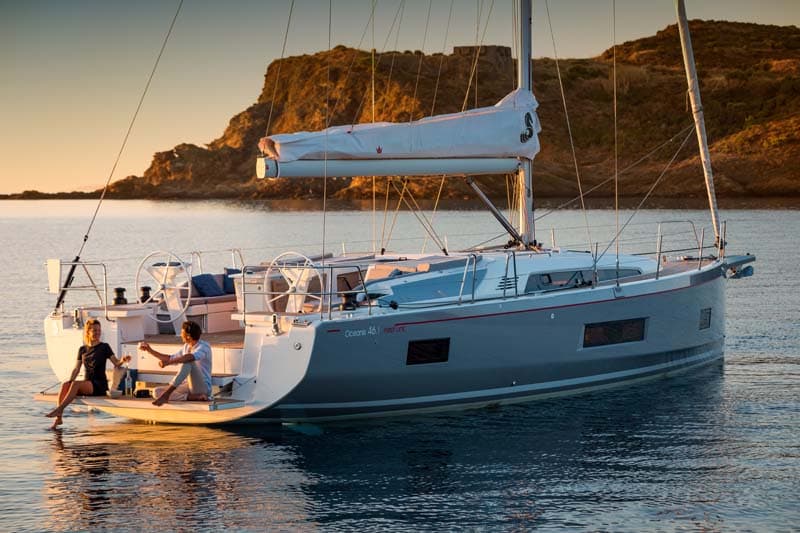
Cruising MonohullEuropean Yacht of the Year winner and the most-listed Beneteau on YachtWorld. The Oceanis 46.1 dominates both the charter and private market with a versatile deck plan, spacious interior, and the kind of sea-keeping ability that inspires long-distance cruising confidence.
Show 1 award
Show 5 key features
Updated 10 June 2026 · By Hulls.io Editorial
The Beneteau Oceanis 46.1: A Complete Guide
The Beneteau Oceanis 46.1 is one of the most commercially successful production cruising monohulls of the past decade — a 46-footer that won the European Yacht of the Year 2019 in the Family Cruiser category and went on to sell more than 500 hulls in its first five years of production. Built by Beneteau, the flagship brand of Groupe Beneteau — the world’s largest sailboat manufacturer — the Oceanis 46.1 carries a Finot-Conq hull shape beneath a Nauta Design interior, the same partnership that has defined the “.1” generation of the Oceanis range since the late 2010s.
The “.1” generation brought three transformative changes to the Oceanis line: new hull shapes from two leading French offices — Berret-Racoupeau for the flagship Oceanis 51.1 and Finot-Conq (Pascal Conq) for the 46.1, 40.1, 34.1, and 30.1 — interior and deck styling by Milan’s Nauta Design studio, and a distinctive hard-chine, stepped hull form that maximises waterline beam and interior volume while maintaining genuine sailing performance. Unveiled at the Cannes Yachting Festival in September 2018, the Oceanis 46.1 was the direct replacement for the Oceanis 45 — itself the most successful production cruiser of its era, with more than 800 hulls delivered. The 46.1 set out to surpass that benchmark, and its commercial trajectory suggests it has done exactly that.
Production takes place primarily at Beneteau’s facility in Cholet, France, where in June 2023 the company celebrated the milestone of the 500th Oceanis 46.1 hull. Early production for the North American market was handled at Beneteau America’s factory in Marion, South Carolina (closed 2020), where the first US-built 46.1 was delivered in 2019. The model has also been one of the most sought-after platforms in the global charter fleet, with operators including Sunsail, Dream Yacht Charter, and Navigare Yachting deploying it extensively across the Mediterranean, Caribbean, and Indian Ocean.
Hulls.io currently tracks 1 active listing for the Beneteau Oceanis 46.1, drawn from brokerages worldwide. With 30 tracked listings in our market intelligence database, comprehensive pricing and depreciation data is available for this high-volume model.
Showing 1–1 of 1 results
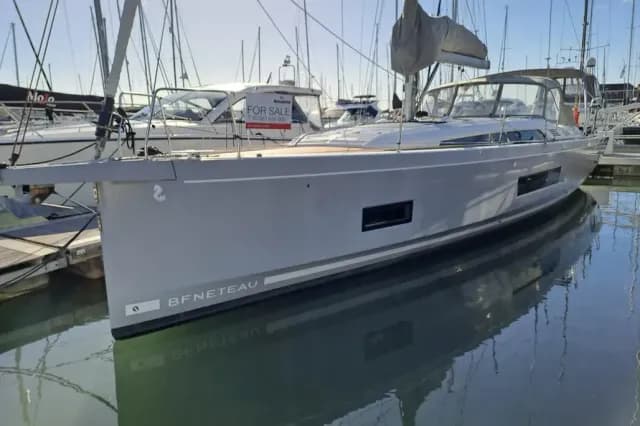
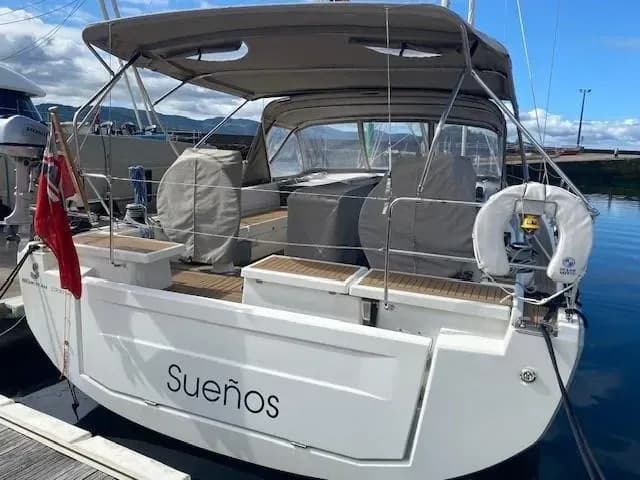
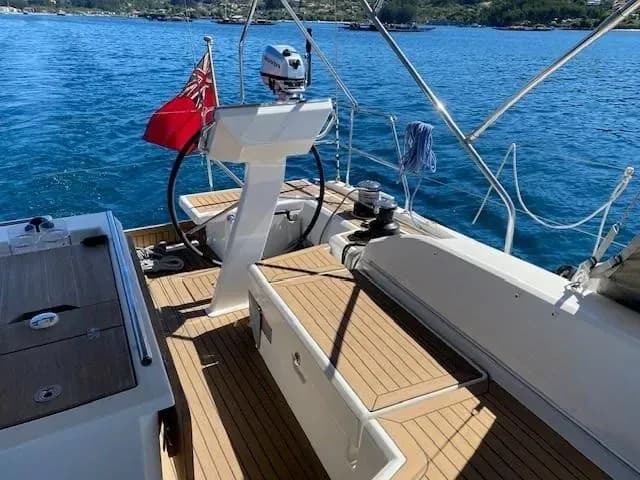
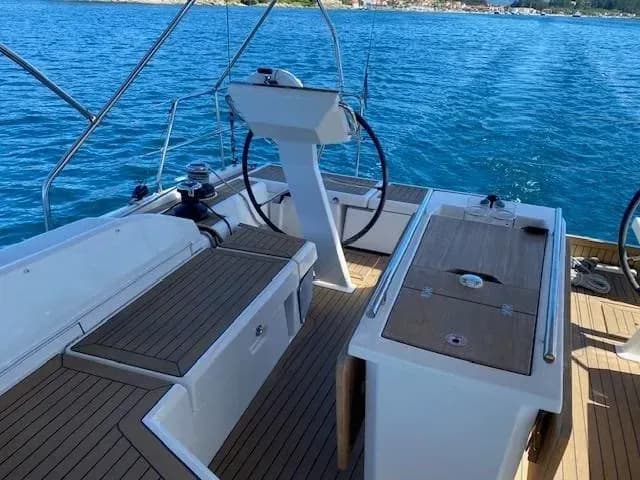
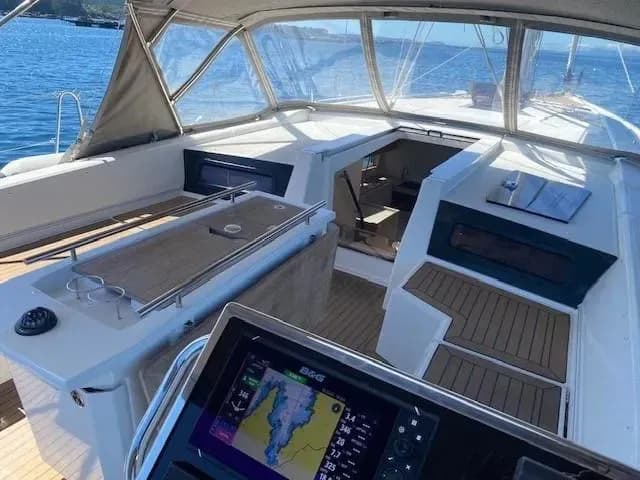
2022 Beneteau Oceanis 46.1 - Performance Cruiser with Premium Specification
Beneteau Oceanis 46.1 Specifications
| Specification | Detail |
|---|---|
| LOA | 14.60 m (47 ft 11 in) |
| Hull length | 13.65 m (44 ft 9 in) |
| LWL | 13.24 m (43 ft 5 in) |
| Beam | 4.50 m (14 ft 9 in) |
| Draft (shallow keel) | 1.75 m (5 ft 9 in) |
| Draft (deep keel) | 2.35 m (7 ft 9 in) |
| Draft (performance keel) | 2.65 m (8 ft 8 in) |
| Light displacement | ≈10,597 kg (23,356 lbs) |
| Ballast (shallow, cast iron) | ≈3,061 kg (6,748 lbs) |
| Ballast (deep, cast iron) | ≈2,735 kg (6,028 lbs) |
| Ballast (performance, cast iron/lead bulb) | ≈2,576 kg (5,679 lbs) |
| Ballast ratio | ≈26% |
| Mainsail area (standard in-mast furling) | ≈44.5 m² (479 sq ft) |
| Self-tacking jib area (standard) | ≈44 m² (474 sq ft) |
| Total upwind sail area (standard) | ≈89 m² (958 sq ft) |
| Mainsail area (First Line, slab-reef) | ≈58 m² (624 sq ft) |
| Genoa area (First Line) | ≈62 m² (667 sq ft) |
| Total sail area (First Line) | ≈120 m² (1,292 sq ft) |
| Air draft (standard mast) | 20.31 m (66 ft 8 in) |
| Air draft (performance mast) | 21.31 m (69 ft 11 in) |
| Engine (standard) | Yanmar 4JH57, 57 HP common-rail diesel |
| Engine (optional) | Yanmar 80 HP common-rail diesel |
| Drive | Saildrive |
| Fuel capacity | 200 L (53 US gal) standard; 240 L option |
| Water capacity | 370 L (98 US gal) standard; 530 L option |
| Cabin layouts | 3, 4, or 5 cabins |
| Heads | 2, 3, or 4 |
| Naval architecture | Finot-Conq (Pascal Conq) |
| Interior / deck design | Nauta Design (Milan, Italy) |
| Builder | Beneteau (Groupe Beneteau) |
| Build locations | France (Cholet); formerly also USA (Marion, SC, closed 2020) |
| Hull construction | Monolithic polyester contact moulding (solid GRP) |
| Deck construction | Injected fibreglass/Saerform foam-core sandwich |
| Keel attachment | Cast iron keel, stainless steel bolts with backing plates |
| Rudders | Twin rudders, stainless steel stocks |
| CE category | A (Ocean) |
| Year introduced | 2018 (world premiere, Cannes Yachting Festival) |
| Production start | 2019 |
| PHRF rating | ≈93 |
The Finot-Conq hull shape is the defining technical feature of the Oceanis 46.1. Naval architect Pascal Conq employed a “stepped” hull form — first introduced on the larger Oceanis 51.1 — in which the canoe body flares dramatically to a hard chine immediately above the waterline. This chine adds approximately 0.5 m of effective beam at deck level, pushing the saloon settees outboard by 15 cm on each side compared to the predecessor Oceanis 45 and creating an interior volume typically associated with a 48–50 foot yacht. The chine begins above the waterline and moves below only at wider angles of heel, where it provides additional form stability and resistance to broaching.
Construction is monolithic (solid) GRP for the hull laminate, with an injected fibreglass and Saerform closed-cell foam sandwich for the deck — a modern approach that provides excellent stiffness-to-weight ratio and thermal insulation. The hull and deck are joined via glued and mechanically fastened flanges, the standard approach across Beneteau’s production line. A monolithic structural countermould (liner) is bonded to the hull interior, distributing keel, rudder, and rig loads across the structure. The cast-iron fin keel is externally bolted with stainless steel studs and backing plates accessible from inside the bilge. Twin rudders with stainless steel stocks provide steering, matched to a twin-wheel helm station via fibre steering linkages.
The Oceanis 46.1 offers three keel options. The shallow-draft cast iron keel (1.75 m) is the heaviest at 3,061 kg, compensating for the reduced righting moment of the shorter fin — this version is ideal for the Bahamas, the ICW, and shallow Mediterranean anchorages. The deep-draft cast iron keel (2.35 m) at 2,735 kg is the standard choice for most cruising programmes. The performance keel (2.65 m) uses a cast iron fin with a lead bulb, making it the lightest option at 2,576 kg but achieving superior stability and upwind performance by concentrating ballast at the lowest possible point. This performance keel is part of the First Line upgrade package.
Design & Architecture
The Finot-Conq stepped hull: The Oceanis 46.1’s hull is the work of Pascal Conq, whose office (Finot-Conq, originally a partnership with the late Jean-Marie Finot) has produced some of the most successful racing yacht designs in history, including multiple Vendée Globe and Figaro campaign boats. The stepped hull concept maintains a relatively fine, V-shaped bow section forward for comfortable motion in a seaway, then transitions to the hard chine aft where interior volume and stability matter most. The result is a hull that is only 10 cm longer than the Oceanis 45 it replaced, yet carries its maximum beam further forward and higher up, creating an interior that feels a full size class larger. The displacement-to-length ratio of 127 places the 46.1 firmly in the “light” category, while the SA/D ratio of 25.3 (First Line version) indicates a boat with genuine sailing performance rather than a floating apartment.
Nauta Design interior and deck: The exterior and interior styling are by Nauta Design of Milan, a studio best known for superyacht work with Perini Navi, Sanlorenzo, and Baltic Yachts. Nauta brought a contemporary, light-filled aesthetic to the Oceanis range that elevated the brand’s perceived value without significantly increasing production cost. Smart design elements include bookcases built into the central bulkhead, fabric linings on cabin sides, and indirect LED ambient lighting throughout — details that bring a superyacht sensibility to a production cruiser price point.
The transom and swim platform: The Oceanis 46.1 features Beneteau’s signature powered fold-down transom, sometimes referred to colloquially as the “garage door” stern. The motorised, articulated platform folds down on powered block and tackle to create a generous bathing platform measuring 2.65 m x 0.80 m (8 ft 8 in x 2 ft 7 in), finished with natural solid wood slats and a stainless steel removable bathing ladder. A single step separates the fully opened swim platform from the cockpit, providing effortless access to the water. The design has drawn mixed reactions: advocates praise the seamless cockpit-to-water flow and the enormous amount of usable aft space; critics note the engineering complexity and the visual bulk of the closed transom when viewed from astern. In practice, the system has proven durable across hundreds of charter fleet hulls, and it has become a defining aesthetic of the modern Oceanis line.
Twin rudders and cockpit layout: The twin rudders are a necessity for the beamy, flat-bottomed stern section — a single centreline rudder would lose effectiveness at wider angles of heel. The twin-wheel helm stations are positioned outboard, connected via fibre steering linkages that, when properly aligned, deliver a helm feel described by reviewers as “as light and responsive as a traditional tiller.” The cockpit features a spacious central area with an optional dining table, coaming-mounted winches accessible from both helms, and clear sightlines forward from the steering position. The mainsheet is led to the coachroof, keeping the cockpit entirely clear for socialising and movement.
Performance & Sailing
Upwind performance: Punching into a 2 m swell in 15 knots of true wind during press boat tests off Port Ginesta, the Oceanis 46.1 (First Line version with deep lead-bulb keel) showed a comfortable and consistent 7.5+ knots of boat speed on the wind. The V-shaped bow sections keep the hull from slamming — designer Pascal Conq noted that the hull camber allows for a less full bow than competitors, reducing pitching motion. The deep keel (2.35 m) bites well upwind; the shallow-draft version (1.75 m) trades approximately 0.5–1 knot of pointing ability for the flexibility to access thin-water cruising grounds. Tacking is described by reviewers as “deliberate rather than snappy” — this is a cruising yacht, not a racer, and the wide beam requires momentum through the tack.
Reaching and downwind: Off the wind is where the Oceanis 46.1 truly excels. In 20 knots of true wind with Force 6–7 gusts during press tests, the boat easily maintained double figures. The wake separates at approximately 11 knots, and reviewers recorded short surfs of 12–14.5 knots. The wide, flat aft sections and hard chines allow the hull to lift and accelerate without the rhythmic rolling that plagues narrower designs on a dead run. With a Code 0 flown from the optional bowsprit, the boat transitions smoothly from displacement to semi-planing mode on deep reaches. In lighter conditions — 6 knots of true wind on a close reach — the standard version with in-mast furling main still managed 4.5 knots, demonstrating respectable light-air ability for a 10.5-tonne cruiser.
PHRF rating and racing: The Oceanis 46.1 carries a PHRF rating of approximately 93, placing it mid-fleet among cruiser-racers of this size. The SA/D ratio is 17.58 (standard rig) to 25.3 (First Line), with a displacement-to-length ratio of 127. For context, a Beneteau First 40 rates at PHRF 36 and a Jeanneau Sun Odyssey 45 at PHRF 72. The 46.1 is not designed for podium finishes, but owners report competitive results in handicap cruiser classes, particularly when equipped with the First Line performance package.
The First Line package: The performance upgrade available for the Oceanis 46.1 includes a taller mast (one additional metre, in aluminium or optional carbon fibre), increasing sail area by 28%. The package also includes a deep lead-bulb T-keel (2.65 m draft) for reduced drag and improved righting moment, an integrated bowsprit for flying a Code 0 and housing the anchor, Harken Performa deck fittings with upsized winches, composite steering wheels, and a flat-deck genoa furler. The standard version uses in-mast furling and a self-tacking jib; the First Line replaces this with a fully battened main on a slab-reef system and a genoa, which together deliver a markedly more powerful and versatile sail plan.
Under power: The standard Yanmar 4JH57 (57 HP) saildrive provides adequate performance for the 46.1’s displacement in most conditions. An 80 HP Yanmar common-rail option is available for owners who want additional punch in heavy weather or strong currents. Cruising speed under power is approximately 7–7.5 knots at moderate RPM. The standard 200-litre fuel tank provides a powered range of approximately 250–350 nautical miles in calm conditions; the optional 240-litre tank extends this slightly. Bow thruster is a popular and highly recommended option for Mediterranean stern-to berthing manoeuvres.
Interior Layout & Design
The Oceanis 46.1 is celebrated for its exceptional interior configurability — arguably the most flexible layout programme of any production cruiser in its size class. Beneteau offers five distinct cabin and head configurations: 3 cabins / 2 heads, 3 cabins / 3 heads, 4 cabins / 2 heads, 4 cabins / 4 heads, and 5 cabins / 3 heads. This range spans from a luxurious owner’s version with en-suite heads in every cabin to a maximum-berth charter specification sleeping up to ten. The 3-cabin / 3-heads layout is the most popular choice for private owners, while the 5-cabin configuration is standard for charter fleet deployments.
Owner’s cabin: The forward master stateroom is astonishingly large for a 46-footer — a direct beneficiary of the stepped hull’s volume gains. The cabin features a king-size island berth measuring 160 cm x 205 cm (5 ft 3 in x 6 ft 9 in), accessible from both sides. A separate head and shower compartment, plus his- and-hers hanging lockers, complete the suite. Beneteau was able to take the forward cabin module from the larger Oceanis 48 and adapt it for the 46.1, resulting in an owner’s suite that reviewers consistently describe as one full size class above what the boat’s LOA would suggest.
Saloon and galley: The main saloon features a U-shaped settee to starboard with a sizeable folding dining table that comfortably seats eight. Headroom is generous: 1.98 m (6 ft 6 in) at the companionway, rising to 2.01 m (6 ft 7 in) in the saloon centre. The galley is offered in two configurations: an L-shaped galley to port of the companionway (the standard arrangement), or a longitudinal galley running forward-to-aft on the port side in place of the port settee, paired with a chart table / navigation station to starboard. Both configurations include a top-opening and front-opening refrigerator, a two-burner gas hob, oven, and a stainless steel sink. Large hull portholes on both sides flood the saloon with natural light — a hallmark of the Nauta Design approach.
Interior finishes: The standard interior features Alpi Walnut woodwork with Rovere Aleve parquet-style laminated floorboards, interior cushions in cloth, and padded fabric linings in the saloon. A choice of light brushed oak or mahogany veneer sets the tone and can be customised to the owner’s preference. The light oak option, combined with the oversized hull portholes and coachroof windows, creates a remarkably bright and airy interior that feels contemporary without sacrificing the warmth of real wood.
Aft cabins: The aft cabins vary by layout but typically feature double berths with hull portholes and coachroof portlights for natural ventilation and light. A bunk-bed cabin option is available in some configurations, making the boat particularly flexible for families with children. In the 4- and 5-cabin layouts, the aft quarters are inevitably more compact, but the stepped hull ensures that even the smallest cabins retain adequate headroom and ventilation.
Pricing & Market
New-build pricing: The base price of a new Beneteau Oceanis 46.1 is approximately €318,000 (excluding VAT), as published in Beneteau’s B2025 retail price list. Most buyers add €50,000–100,000 in options and equipment, bringing a well-specified cruising boat to approximately €370,000–420,000 ex-VAT. Fully equipped versions with the First Line performance package, comprehensive electronics (Raymarine Axiom+ MFDs, AIS, radar), electric winches, generator, watermaker, bimini and sprayhood, cockpit cushions, and upgraded interior can reach €500,000–550,000 ex-VAT. In the US market, new 46.1s typically list at USD 450,000–660,000 depending on specification. A fully loaded First Line build (Hull #520) was listed at USD 707,605 through a California dealer, representing the top end of the range.
Pre-owned market: The used market for the Oceanis 46.1 is active and transparent, with approximately 50–60 listings typically available globally at any given time. Approximate asking prices by model year (as of early 2026): 2019 models range from €195,000 (ex-charter, Mediterranean) to USD 449,000 (private, US market); 2020 models at €370,000–380,000 (European, privately used); 2021 models at €340,000+; 2022 models at €320,000–380,000; and 2023 models at €355,000+. Ex-charter boats from the Mediterranean market represent the strongest value opportunity, typically priced 30–50% below comparable privately owned examples — but buyers should budget for cosmetic refresh and higher engine hours.
Depreciation: The Oceanis 46.1 follows a well-established depreciation curve for high-volume Beneteau production models. Expect approximately 15–20% depreciation from the total equipped price in the first year (much of this is the commissioning and options “markup” that immediately washes out), followed by 5–8% per year through years two to four, slowing to 3–5% per year from year five onward. The model’s strong charter fleet presence means a steady supply of 3–5-year-old ex-charter boats entering the resale market each year, which supports price transparency but creates downward pressure on used values. After approximately 10 years, well-maintained Beneteau hulls tend to stabilise in value and may even appreciate gently as new-build prices continue to climb.
Ownership & Running Costs
For a privately owned Oceanis 46.1 based in the Mediterranean, annual operating costs typically range from €15,000 to €30,000 depending on location, usage intensity, and whether maintenance is performed by the owner or by professionals. A breakdown of the major cost categories:
- Marina berth: €4,000–15,000+ per year for a 46-foot slip, varying dramatically by location. Croatia and Greece at the lower end; the Côte d’Azur, Balearics, and Italian Riviera at the upper end. In the US, expect USD 5,500–17,000+ annually depending on whether you are in the Chesapeake, New England, or Florida / Southern California.
- Insurance: 0.8–1.5% of hull value annually, equating to approximately €3,000–7,000 for most cruising programmes. Rates are lower for experienced skippers with clean claims history and boats kept in low-risk cruising grounds.
- Haul-out and antifouling: Annual haul-out with bottom paint, anode replacement, and running gear inspection typically costs €2,000–4,000. For a 46-footer, hull cleaning runs approximately €500–900 and antifouling paint €700–1,400.
- Engine service: Annual Yanmar service (oil change, filters, impeller, belt inspection) runs €400–800. The 57 HP saildrive is a proven, widely supported powerplant with excellent parts availability globally.
- Winterisation: In northern climates, winterising (engine, watermaker, heads, domestic water system) and winter storage adds €2,000–5,000 per season. Indoor heated storage for a 46-footer can reach €4,000–8,000 in premium boatyards. In the Mediterranean, on-the-hard winter storage (October to May) costs approximately €2,500–4,000.
- Rigging and sails: Standing rigging should be inspected annually and replaced every 10–12 years (€8,000–15,000). In-mast furling sails (standard version) typically last 5–8 years with moderate use (€5,000–8,000 to replace). The First Line’s slab-reefing main with battens delivers better shape and longevity but costs more to replace.
The industry rule of thumb for yacht running costs is approximately 10% of the boat’s value annually. For an Oceanis 46.1 valued at €350,000–500,000, this implies €35,000–50,000 all-in — a figure that includes depreciation, berth, insurance, maintenance, fuel, and capital cost of ownership. The Oceanis 46.1’s single engine, aluminium rig, production-standardised systems, and global parts network keep actual maintenance costs well below those of larger or more bespoke yachts, making it one of the more affordable 46-footers to own and operate.
Awards & Production History
The Oceanis 46.1 won the European Yacht of the Year 2019 in the Family Cruiser category, announced on 19 January 2019 at the “Flagship Night” ceremony during Boot Düsseldorf. The European Yacht of the Year Award is widely regarded as the most prestigious production yacht prize in the industry — the “Oscars of water sports” — judged by a jury of 12 leading sailing magazines from across Europe. The jury praised the 46.1’s “incredible sensations at the helm” and the balance between performance, comfort, and usable space. The award marked the third consecutive year that a Beneteau sailing yacht had won in the EYOTY programme, following the Figaro 3 (Special Yachts 2018) and the Oceanis Yacht 62 (Luxury Cruiser 2017).
Production timeline: The Oceanis 46.1 was unveiled at the Cannes Yachting Festival in September 2018 and entered series production at Cholet in November 2018. By March 2019, approximately 50 hulls had been completed in France, and the first US-built example had been delivered from the Marion, South Carolina factory. The 500th hull was celebrated in June 2023 at Cholet. Production continued through the 2025 and into the 2026 model year, with new 2025 and 2026 model-year boats available from dealers as of early 2026. Total production is estimated at well over 600 hulls.
Model status: As of early 2026, the Beneteau website categorises the Oceanis 46.1 under its “Oceanis 2015–2022” archive section, suggesting the model is being phased into legacy status. No official successor (an “Oceanis 46.2” or equivalent) has been publicly announced, though such a model is widely anticipated by the industry. The current “.1” generation naming convention has been succeeded by new nomenclature on some Beneteau models, and any replacement would likely carry updated Beneteau branding. Remaining new-build inventory is still available through authorised dealers worldwide, representing the final opportunity to acquire an Oceanis 46.1 factory-new.
Known Issues & Buying Considerations
The Oceanis 46.1 is a high-volume production yacht built to a price point, and like all production boats, it has characteristic areas that require attention during ownership or pre-purchase survey. The following are the most commonly reported issues by owners and surveyors:
- In-mast furling mainsail: The standard in-mast furling system is the single most debated aspect of the 46.1. The sail has no battens and therefore no roach, which reduces effective area and shape compared to a slab-reefing main. Owners report the system can jam or cam mid-furl if the outhaul is not kept taut or if the sail is allowed to luff while furling. Early boats with Neil Pryde in-mast sails drew particular criticism. The First Line version with slab-reefing eliminates this issue entirely.
- Gelcoat crazing: Cosmetic gelcoat crazing around high-load deck fittings (stanchion bases, mooring cleats, winch pads) has been reported on some hulls, particularly those with charter use. This is a common issue across all production builders using polyester gelcoat and is generally cosmetic rather than structural, though it should be investigated during survey to rule out underlying core moisture intrusion.
- Interior hardware durability: Locker latches, saloon door locks, and cabinetry hardware have drawn complaints for premature failure. Interior spring mechanisms in door latches can fail within a few seasons, and some owners report screws that are undersized for their fittings and hinges installed with two fasteners instead of three. These are inexpensive fixes but can be frustrating on a new boat.
- Fuel tank gasket: A known issue on early production boats involves the fuel tank top gasket (feed and return line housing) failing and allowing diesel to seep into the engine bilge after refuelling. This has been reported on boats as young as one year old. The gasket is accessible and replaceable, and the issue appears to have been addressed in later production.
- Keel bolt monitoring: As with all externally bolted production keels, owners should inspect keel bolt areas annually for rust staining around nuts and backing plates. Rust discolouration is often caused by persistent bilge water rather than a keel fault, but it warrants investigation. Keel bolt torque should be checked during every haul-out.
- Deck hardware bedding: Stanchions, chainplates, and other deck-mounted fittings can develop minor leaks over time if not re-bedded during routine maintenance. On a cored-deck construction, water ingress through poorly sealed hardware penetrations can lead to core degradation — deck moisture readings should be taken during any pre-purchase survey.
- Electrical system: Some owners have reported issues with bilge pump wiring, condensation drainage from air conditioning systems, and occasional electronics failures. These are not unique to the 46.1 but are common across the production yacht segment where electrical installations are performed at pace on a production line.
In context, these issues are typical of high-volume production yachts and should not be overweighted relative to the Oceanis 46.1’s strengths. The boat has proven durable across hundreds of charter fleet hulls operating in demanding Mediterranean conditions, and the vast majority of privately owned 46.1s deliver years of reliable service with standard maintenance. A thorough pre-purchase survey by a qualified marine surveyor remains the best protection for used-boat buyers.
Beneteau Oceanis 46.1 vs Competitors
The 44–47-foot production cruiser segment is intensely competitive, with every major European builder offering a direct rival. The Oceanis 46.1’s position as the segment’s best-seller reflects its balance of interior volume, sailing performance, build consistency, and global service support — but every competitor offers strengths the Beneteau does not.
Oceanis 46.1 vs Jeanneau Sun Odyssey 440
The Jeanneau Sun Odyssey 440 is the 46.1’s sibling rival — both brands belong to Groupe Beneteau and share many suppliers. The Sun Odyssey 440, designed by Philippe Briand, differentiates with an innovative walk-around deck and lighter helm response that delivers what many reviewers consider the best sailing feel of any production cruiser. The 440 is marginally lighter with a taller rig, giving it an edge in light air and manoeuvrability. The Oceanis 46.1 counters with significantly more interior volume (the stepped hull creates a quantum difference in living space), more layout options, and higher production volume translating to better resale liquidity. Charter rates for the Sun Odyssey 440 run 5–10% above an equivalent Oceanis, reflecting its slightly more premium positioning.
Oceanis 46.1 vs Hanse 460
The Hanse 460 is the German contender from Greifswald, designed by Berret-Racoupeau — the first Hanse yacht from this French office, replacing the long-standing judel/vrolijk partnership. The Hanse offers a self-tacking jib as standard — a feature refined over two decades that makes it arguably the best shorthanded production cruiser available. The Hanse 460 uses a sandwich hull construction with balsa core and vinylester outer skin (versus the Beneteau’s monolithic hull), which some surveyors consider a more modern build method. The interior is functional but more austere than the Nauta-designed Oceanis. The Oceanis 46.1 wins on interior volume, aesthetic refinement, and the sheer depth of its global dealer and charter network.
Oceanis 46.1 vs Bavaria C46
The Bavaria C46 is the value leader in this segment, offering more standard equipment per euro than any French rival. Built in Giebelstadt, Germany, the Bavaria has a 20% ballast-to-displacement ratio (lower than the Oceanis’s ~26%, relying on beam-derived form stability rather than ballast) and delivers surprisingly competitive sailing performance — owners have reported outrunning more expensive boats in mixed-fleet sailing. The Oceanis 46.1 distinguishes itself with Nauta Design’s interior refinement, the Finot-Conq hull’s light-air performance advantage, and notably stronger resale values. Bavaria’s corporate restructuring in recent years has introduced some uncertainty around long-term warranty and parts support.
Oceanis 46.1 vs Dufour 470
The Dufour 470 is the performance-oriented French alternative, designed by Umberto Felci. At 14.85 m LOA with a beam of 4.74 m, the Dufour is the largest boat in this comparison. It features a vacuum-infused hull with PVC foam core and vinylester outer skin — a build method that some consider superior to the Beneteau’s contact-moulded monolithic hull. The Dufour’s defining innovation is a three-version deck concept (Easy, Ocean, Performance), allowing buyers to choose their level of sailing complexity. The Dufour 470 won the British Yachting Awards Cruising Yacht of the Year 2021. The Oceanis 46.1 counters with its unmatched interior layout flexibility (five configurations vs three), the proven charter fleet track record, and a wider global dealer network. Base price is comparable (Dufour at €339,500 vs Beneteau at €318,000).
Oceanis 46.1 vs Hallberg-Rassy 44
The Hallberg-Rassy 44 is a fundamentally different proposition. Designed by Germán Frers and built in Ellös, Sweden, the HR 44 is a centre-cockpit, semi-custom bluewater yacht with a ballast-to-displacement ratio of nearly 40% (vs the Beneteau’s ~26%), an angle of vanishing stability (AVS) of 128°, and build quality that reviewers consistently describe as “flawless.” It won the Best Midsize Cruiser Under 45 Feet award at the 2020 Cruising World Boat of the Year contest. The trade-off is price: the HR 44 lists at approximately €758,000 new — more than double the Beneteau. For coastal cruising, Mediterranean sailing, and charter programmes, the Oceanis 46.1 offers overwhelming value. For dedicated offshore passagemaking, North Sea conditions, and multi-year circumnavigation programmes, the Hallberg-Rassy occupies a different tier of seaworthiness, build quality, and long-term durability that no production builder matches.
For a full interactive comparison between the Beneteau Oceanis 46.1 and other models, visit the Hulls.io Market Intelligence tool.
Value & Market Insight
Based on analysis of 30 tracked listings across 3 model years, with five-year value retention around 57%.
The newest qualifying model year in our dataset (2023) has a median asking price of £425K.
Market insight based on asking prices from 30 tracked listings analysed by Hulls.io (April 2026 data). Figures reflect asking prices, not final sale prices.
Beneteau Oceanis 46.1 Value Retention
Newest vintage = 100%. Older vintages shown as % of that price.
Based on median asking prices by model year. The newest model year in our dataset is used as the 100% reference point. The curve is smoothed so retention never increases as age increases — hover over data points to see raw values. Shaded band shows the 25th–75th percentile price range. Figures reflect asking prices from tracked listings, not final sale prices.