


Privilege Signature 510 for Sale
Bluewater Cruising CatamaranThe Privilege Signature 510 is a semi-custom bluewater cruising catamaran built in France by Privilege Marine — the brand founded in 1985 by two-time BOC Challenge winner Philippe Jeantot. Designed by Marc Lombard with interiors by superyacht studio Franck Darnet Design, the 510 is defined by its structural nacelle (rostral pod) housing a full-beam owner's suite spanning 26 feet between the hulls, and its signature elevated salon providing panoramic views no conventional catamaran can match. Built using full vacuum resin infusion rather than hand lamination, the 510 represents one of the highest build-quality standards in the 50-foot catamaran segment. Evolved from the Serie 5 platform with 30% more glazing and a completely redesigned interior.
Show 2 awards
Show 6 key features
Related models
Updated 10 June 2026 · By Hulls.io Editorial
The Privilege 510: A Complete Guide
The Privilege Signature 510 is a semi-custom bluewater cruising catamaran built at Les Sables d’Olonne on the French Atlantic coast — the very port from which the Vendée Globe fleet departs for the world’s most demanding solo sailing race. Designed by naval architect Marc Lombard with interiors by superyacht designer Franck Darnet, the 510 embodies the Privilege philosophy of “No Compromise” — a yacht built for experienced sailors who demand genuine offshore capability, superlative build quality, and the kind of semi-custom attention that mass-production builders cannot offer.
The defining architectural feature of every Privilege catamaran is the rostral pod — a structural nacelle on the forward crossbeam between the two hulls that serves three purposes simultaneously. First, it provides extraordinary longitudinal stiffness to the entire platform, acting as a structural bridge. Second, it creates reserve buoyancy forward, improving the catamaran’s behaviour in heavy seas and reducing the risk of nosediving. Third, it houses the full-beam owner’s suite — a cabin that spans approximately 26 feet at its widest, with a private companionway from the saloon, en-suite head, and dressing room. No competitor in the 50–55 ft segment offers anything comparable.
The Privilege brand was founded in 1985 by Philippe Jeantot — a two-time winner of the BOC Challenge (the predecessor to the Vendée Globe) — and René Bernard. Jeantot’s motivation was deeply personal: having raced alone around the world twice, he wanted to take his family on the same oceans with the safety, comfort, and space that no existing catamaran could provide. When he couldn’t find such a yacht, he built it. Jeantot also founded the Vendée Globe race itself in 1989, forever linking the Privilege name to the most extreme test of yacht and sailor. Since 1985, over 1,000 Privilege catamarans have been built.
The Signature 510 evolved from the Privilege Serie 5 (launched ~2015–2016), sharing the same Marc Lombard hull platform but with dozens of improvements: 30% more glazed area with slimmer window mullions, a stretched coachroof, a completely redesigned Darnet interior, and a simplified navigation station with digital switching. Privilege Marine currently produces approximately 20 catamarans per year across the 510, 580, and 650 models — each one semi-custom, with a build time of approximately six months.
Hulls.io currently tracks 1 active listing for the Privilege 510, drawn from brokerages worldwide.
Showing 1–1 of 1 results
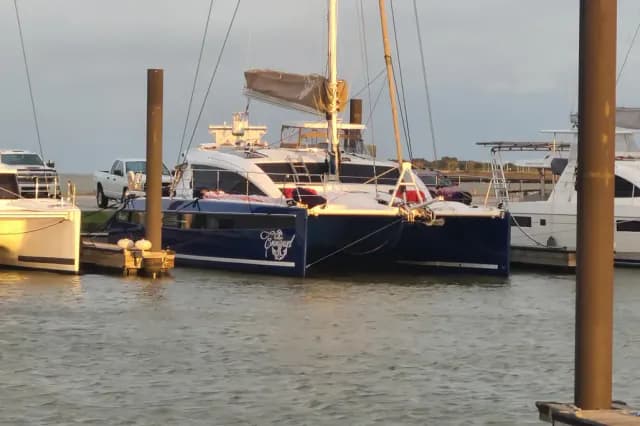
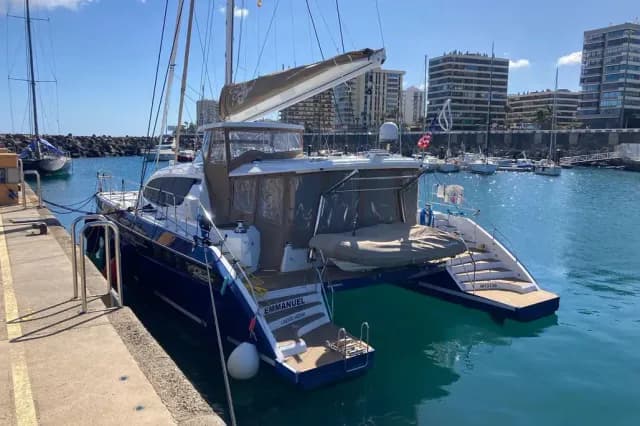
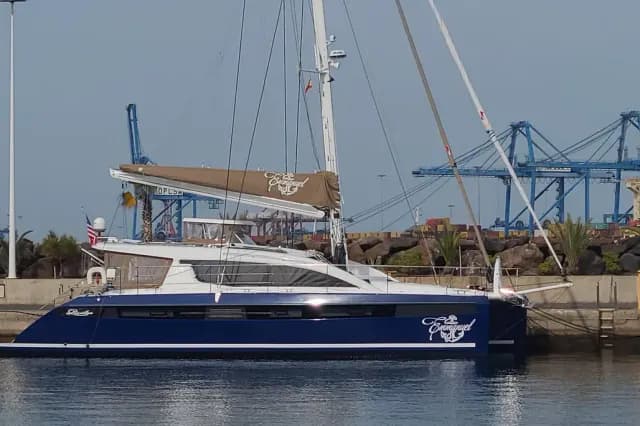
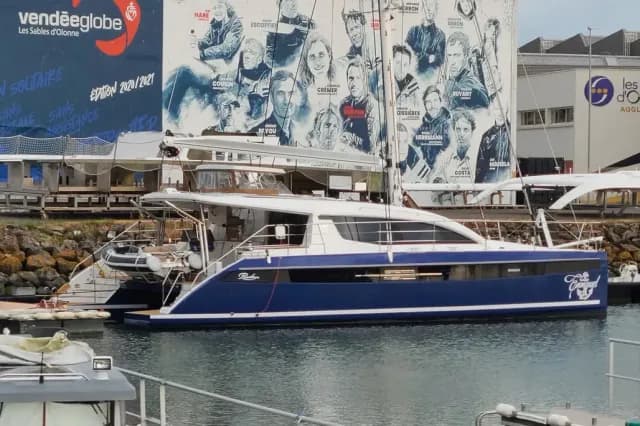
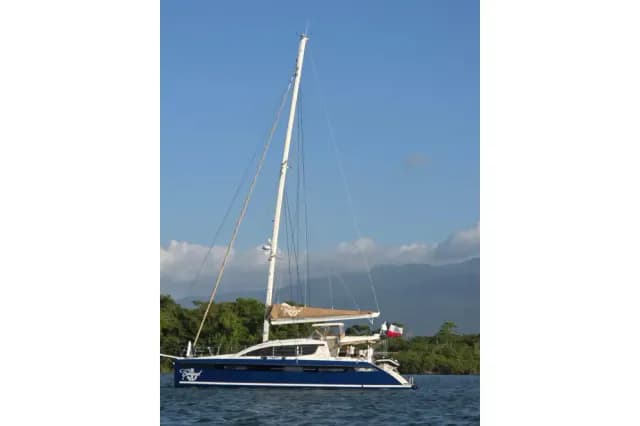
2023 Privilege Signature 510 Catamaran
Privilege 510 Specifications
| Specification | Detail |
|---|---|
| LOA | 17.09 m (56 ft 1 in) |
| LWL | 15.13 m (49 ft 8 in) |
| Beam | 7.98 m (26 ft 2 in) |
| Draft | 1.57 m (5 ft 2 in) |
| Displacement (light) | 16,800 kg (37,000 lbs) |
| Displacement (full load) | 22,800 kg (50,700 lbs) |
| Payload capacity | ~6,000 kg (13,200 lbs) |
| Mainsail area | 88 m² (947 sq ft) — square-top |
| Genoa area | 57 m² (613 sq ft) |
| Total working sail area | 145 m² (1,560 sq ft) |
| Gennaker (optional) | 120 m² (1,292 sq ft) |
| Mast height | 21.21 m (69 ft 7 in) |
| Engines | 2× 55 HP diesel (80 HP option) |
| Drive | Saildrive (standard) or shaft drive (option) |
| Fuel capacity | 800 litres (211 US gal) |
| Water capacity | 600 litres (158 US gal) |
| Cabins | 3 standard (4-cabin option) |
| Heads | 3 (each en suite with separate shower) |
| Construction | GRP — vacuum resin infusion, PVC foam core sandwich |
| Naval architecture | Marc Lombard Design (La Rochelle, France) |
| Interior design | Franck Darnet / Darnet Design |
| Builder | Privilege Marine, Les Sables d’Olonne, France |
| CE category | A (Ocean) |
The construction deserves particular attention. The 510 is built using full vacuum resin infusion — not hand lamination. The outer half-hulls, nacelle, and inner half-hulls are each prepared dry in their respective moulds (already gelcoated), then directional glass cloth is laid up using Divinycell PVC foam for the sandwich core, and the entire assembly is vacuum-infused with polyvinylester resin. The first layer uses vinylester resin specifically for osmosis resistance, with isophthalic gelcoat providing additional protection. This infusion process produces a more consistent laminate with a better fibre-to-resin ratio — lighter, stronger, and more uniform than hand-laid construction.
The 6-tonne payload capacity is a critical number for liveaboard cruisers. A fully loaded Privilege 510 displaces 22,800 kg — the difference between light ship and loaded displacement represents fuel, water, provisions, personal effects, a tender, and all the equipment accumulated during extended cruising. Six tonnes of payload is generous and reflects a yacht designed for serious long-range voyaging rather than weekend coastal sailing.
Performance & Sailing
Under sail: The Privilege 510 comfortably achieves 9–10 knots reaching in a decent breeze (15–20 knots true wind), with a theoretical hull speed of 9.44 knots. The square-top mainsail (88 m²) and furling genoa (57 m²) provide 145 m² of working sail area, supplemented by an optional staysail (20 m²) and a 120 m² gennaker for downwind sailing. The sails are supplied by OneSails using Hydra Net laminate fabric. This is a displacement catamaran designed for efficient passage-making rather than outright speed — and one owner documented sailing 9,200 nautical miles in 12 months, confirming the yacht’s genuine bluewater capability.
Sail handling: All halyards and sheets return to the raised port-side helm station via concealed leads, where three electric ANTAL aluminium winches (XT62 two-speed for genoa/staysail sheets, XT52 two-speed for mainsail sheet and traveller, plus one additional) provide genuine shorthanded capability. A couple can manage the 510 safely without crew — an important consideration for the experienced cruising couples who form the core of the Privilege owner community. The raised helm station with fixed windscreen provides commanding all-around visibility for both sailing and close-quarters manoeuvring.
Under power: Twin diesel engines (55 HP standard, 80 HP option) deliver a cruising speed of approximately 8 knots. Engine noise below deck is notably quiet. The standard saildrive option should be replaced with the optional shaft drive system for any serious bluewater programme — shaft drives are more robust, more serviceable in remote locations, and eliminate the rubber seal degradation concerns that affect saildrives over time.
Seakeeping: The Privilege 510 was tested by Multihulls World magazine off Les Sables d’Olonne in 20–25 knots of southwest wind with moderate seas, confirming its passage-making capability and seakeeping qualities in realistic offshore conditions. The nacelle provides reserve buoyancy forward, and the Marc Lombard hull shapes deliver a comfortable, predictable motion — a yacht that builds confidence in challenging conditions. Yachting World included the Privilege 510 Signature in its curated list of the “Best Bluewater Multihulls of All Time” — a significant endorsement.
Interior Layout & Design
Franck Darnet of Darnet Design — a studio more commonly associated with superyacht interiors — was brought in to design the Signature 510’s interior. The result is a contemporary, relaxed aesthetic using high-quality wood joinery (oak standard on Signature versions), with the owner having extensive customisation choices. Privilege describes the build process as “tailor-made, crafted with the precision of a great couturier.”
Owner’s suite: The full-beam forward nacelle cabin is the signature feature. Spanning approximately 26 feet at its widest, the owner’s suite is accessed via a private companionway from the saloon. The starboard side houses a private en-suite head with separate shower; the port side provides a spacious dressing room with dressing table. Full storage lines the gangway. This is, arguably, the largest and most private master cabin in the 50–55 ft catamaran class.
Salon: The elevated salon sits above the waterline, providing panoramic 360-degree visibility through large glazed surfaces. The Signature 510 increased the glazed area by 30% compared to the earlier Serie 5, with slimmer mullions and larger windows throughout. Large sliding glass doors at the aft end create a seamless indoor-outdoor connection with the cockpit. The navigation station has been simplified to feature fewer key instruments, a large flatscreen, and digital switching replacing the earlier panel-based systems.
Galley: Located on the port side of the salon in a U-shaped configuration, with extensive counter space, a full suite of appliances, and abundant cabinet storage. Good ventilation and natural light make the galley a functional workspace for extended cruising.
Guest cabins: Two guest cabins are located aft in each hull, each with its own en-suite head and separate shower stall, double berths, and good natural light. A 4-cabin version is available as an option, adding a crew cabin.
Cockpit: The protected aft cockpit connects seamlessly to the salon through the large sliding doors. An ergonomic double seat at the helm station includes lockers for halyard stowage, and wide side decks with abundant handholds provide safe movement forward. The cockpit is designed for both entertaining at anchor and efficient sail handling offshore.
Privilege 510 Ownership: What to Expect
The Privilege 510 sits in the premium segment of the cruising catamaran market, with ownership costs reflecting the semi-custom build quality and specialist nature of the platform:
- New-build pricing: Approximately EUR 2,200,000 (~USD 2,400,000) for a 2025 model, though the final price varies significantly with options and specification level. Being semi-custom, the build is tailored to the owner’s specific requirements.
- Used market: 2020–2023 Signature 510 models list at approximately USD 1,500,000–1,900,000. Earlier Serie 5 models (2016–2019) can be found from approximately EUR 1,000,000–1,400,000.
- Annual costs: Insurance at 1.0–1.5% of hull value, marina berth fees for a 56-foot catamaran (26 ft beam), twin engine servicing, watermaker maintenance, and general systems upkeep. The full engine rooms provide excellent access for maintenance — a detail that experienced owners value highly.
- Value retention: Privilege catamarans hold their value well relative to mass-production brands, supported by low production volume, premium build quality, and limited availability on the used market. However, the smaller brand recognition compared to Lagoon or Fountaine Pajot means resale can take longer — there are simply fewer buyers familiar with the Privilege name.
Service network: With approximately 20 boats per year produced across all models, the Privilege service and dealer network is smaller than Lagoon’s or Fountaine Pajot’s. Finding Privilege-specific expertise in remote ports can be challenging. Owners planning extended offshore cruising should factor this into their preparation — self-sufficiency in maintenance is more important on a Privilege than on a mass-market catamaran.
How to Buy a Privilege 510: What to Look For
New build vs used: The Privilege 510 remains in active production, with build slots available through Privilege Marine directly and through authorised dealers. The semi-custom process allows extensive specification choices — from interior layout and joinery finishes to equipment and systems. For used examples, the Serie 5 (predecessor) shares the same hull platform and offers strong value.
Key Inspection Areas (Pre-Owned)
- Saildrive condition: If the boat is equipped with saildrives rather than shaft drives, inspect the rubber seals carefully. Saildrive seal degradation is the most commonly cited concern among Privilege owners. For any bluewater programme, the shaft drive option is strongly recommended.
- Gelcoat and hull laminate: The vinylester first layer and isophthalic gelcoat make osmosis a low-risk issue, but regular antifouling maintenance and periodic haul-outs remain important. Moisture meter readings across the hull are standard.
- Watermaker: The standard Dessalator AC Pro D300 (300 litres/hour) is a critical system for offshore cruising. Verify membrane condition, usage hours, and maintenance history.
- Standing rigging: Rigging on cruising catamarans typically needs replacement every 10–12 years. Verify replacement history and inspect swages, terminals, and turnbuckles.
- Generator and electrical: Verify generator hours, service records, and battery bank condition. The 510’s systems are intelligently distributed throughout the boat with maintenance access in mind.
The infusion-built construction produces a more consistent laminate with fewer voids compared to older hand-laid boats, and no systemic structural or design defects have been reported for the 510/Serie 5 line. Engage a surveyor experienced with modern infusion-built catamarans.
Privilege 510 vs Competitors
The 50–55 ft bluewater catamaran segment is fiercely competitive, with the Privilege 510 positioned at the premium end against high-volume production builders. The competitive landscape is defined by the trade-off between build quality and brand recognition.
Privilege 510 vs Lagoon 51
The Lagoon 51 is the market leader in this segment — enormous production volume, the strongest resale values in the industry, and a global service network that no competitor can match. The Lagoon offers tremendous interior volume and the reassurance of the Groupe Beneteau support infrastructure. The Privilege 510 counters with semi-custom build quality, the structural nacelle and its unique full-beam owner’s suite, vacuum-infused construction versus the Lagoon’s hand-laid approach, and a bluewater heritage rooted in solo ocean racing. The Lagoon is the safe, proven choice for the broadest range of buyers. The Privilege is for experienced sailors who prioritise build quality and offshore capability over brand recognition and resale liquidity.
Privilege 510 vs Fountaine Pajot Aura 51
The Fountaine Pajot Aura 51 is the Privilege’s closest competitor in terms of ambition — elegant design, innovation-led features, and a strong dealer network. FP offers excellent build quality at a more accessible price point, with a broader service infrastructure. The Privilege counters with the nacelle design, the superyacht-grade Darnet interior, and the depth of semi-custom specification. Both are French-built catamarans with genuine offshore credentials; the FP offers better value and support, the Privilege offers exclusivity and bespoke finishing.
Privilege 510 vs Catana 53
The Catana 53 is the performance outlier in the segment — lighter at approximately 14,500 kg, with hull shapes optimised for upwind sailing. The Catana is faster and more responsive under sail than the Privilege 510. The Privilege counters with greater interior volume, the nacelle owner’s suite, higher payload capacity (critical for extended cruising), and the semi-custom finishing that reflects its higher price point. The Catana appeals to sailors who prioritise performance; the Privilege appeals to cruisers who prioritise living space and build quality.
Privilege 510 vs Leopard 50
The Leopard 50 (Robertson & Caine, South Africa) is a proven charter and cruising catamaran at a significantly lower price point. The Leopard offers competitive build quality, a strong owner community, and excellent value. The Privilege 510 operates at a fundamentally different level of finish, customisation, and structural sophistication. The Leopard is the practical, value-driven choice; the Privilege is the premium alternative for buyers who demand the best build quality available in a production catamaran.
For a full interactive comparison between the Privilege 510 and competing models, visit the Hulls.io Market Intelligence tool.